5 Morning Light Habits for Dark November Mornings
November mornings are dark, cold, and easy to sleep through. The clocks fell back on November 1, so sunrise comes later and your body still expects the old schedule. You do not need a perfect morning routine — you need light, in the right order, at the right time.

This post contains affiliate links. If you purchase through our links, we may earn a commission at no extra cost to you. We only recommend products we've researched and would use ourselves.
1. Wake Up to Light, Not Just Sound
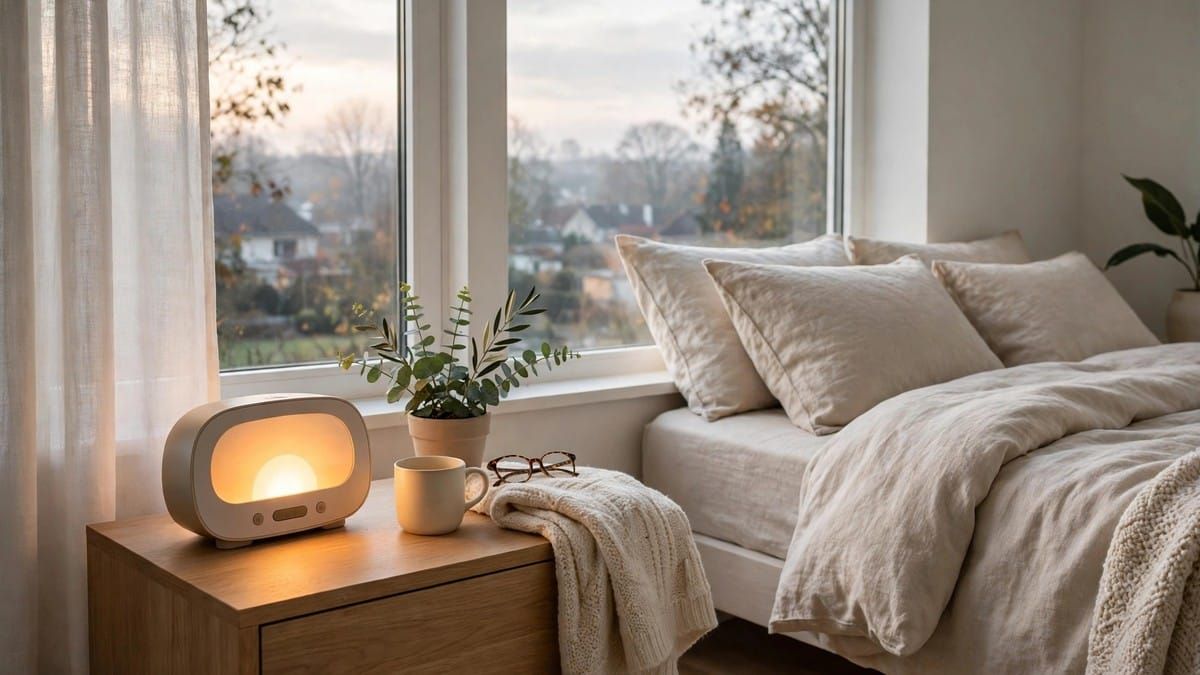
An alarm that only makes noise wakes you up startled. An alarm that adds light wakes you up gradually, the way sunrise used to do before November. Set a sunrise alarm clock to brighten slowly over twenty to thirty minutes before your alarm time, so your eyes open to a room that already feels like morning.
Place the clock where the light actually reaches your face, not behind a pile of books on the far dresser. Keep your regular wake time, even on weekends, for at least a week. Your body adjusts faster to a steady time than to a perfect device, and the light simply makes that steady time easier to keep.
If you share a bedroom, a light-based wake-up is also kinder than a loud buzzer. You wake up, your partner stays asleep, and nobody starts the day annoyed. That small kindness makes the habit easier to repeat tomorrow.
2. Get Bright Light in the First Hour
The most important light habit costs nothing: get bright light within an hour of waking. Open the curtains, step outside for five minutes, or sit near a bright window while you drink water. Even on a cloudy November day, outdoor light is far brighter than indoor room light, and your brain reads that brightness as a clear signal that the day has started.
Pair this with something you already do. Stand outside while the coffee brews, walk to the end of the block before checking your phone, or eat breakfast by the window instead of in a dark kitchen. When light is attached to an existing habit, you do not have to remember it separately — it just happens.
On days when you cannot get outside, turn on more lights than feels normal. Open every blind, switch on the overhead light, and avoid sitting in a dim room until noon. Your energy in the afternoon often traces back to how much light you got before nine in the morning.
3. Protect Your Evenings From Bright Screens
Morning light only works if evening light does not cancel it out. Bright screens late at night tell your brain it is still daytime, which makes falling asleep harder and waking up groggier. You do not have to give up screens entirely — you have to change how bright and how blue they are after sunset.
Blue-light glasses are a simple filter for evening screen time. Wear them for the last hour or two before bed while you finish work, watch a show, or scroll. They will not fix a chaotic sleep schedule on their own, but they remove one strong stay-awake signal at exactly the hour when your body should be winding down.
Combine the glasses with a screen curfew for your phone. Charge it outside the bedroom, set a hard stop time, and replace the last twenty minutes of scrolling with a book, a stretch, or a shower. Morning light starts the clock; evening darkness lets it run on time.
4. Make the Bedroom Truly Dark
If mornings are about light, nights are about darkness. Streetlights, hallway light, and a glowing charger can all fragment your sleep, even when you do not fully wake up. A contoured sleep mask blocks that stray light without pressing on your eyes, so you can sleep on your side or stomach comfortably.
Keep the mask on your pillow, not in a drawer. The habit only works when the tool is visible at bedtime. Put your phone on silent, close the blackout curtains if you have them, and let the mask handle the rest. You will notice the difference most on mornings after a restless night — deeper sleep makes the sunrise alarm feel gentle instead of cruel.
Darkness also helps on weekends, when a partner or a pet might turn on a light early. Instead of waking fully, you stay asleep until your chosen time. That protected sleep is what makes a dark November morning feel manageable rather than miserable.
5. Anchor the Routine With Sleep and Tracking
Light habits work best when sleep itself is steady, and steady sleep is easier to see than to feel. A fitness tracker shows your sleep duration, bedtime drift, and restless nights in one place, so you can tell whether your light routine is actually helping or just feeling productive.
Check two numbers each morning: what time you fell asleep, and how long you slept. If bedtime keeps sliding later, move your evening wind-down fifteen minutes earlier for three nights, not by a full hour at once. Small shifts stick; big resets fail by Wednesday.
Magnesium glycinate is a popular evening supplement many people pair with a wind-down routine, because it is gentle and simple to take at the same time each night. Keep it on the nightstand beside the sleep mask, follow the label directions, and check with your clinician if you take other supplements or medications. The supplement is not the routine — the steady bedtime, dark room, and morning light are. It simply supports an evening you already protect.
How the Five Habits Compare
| Habit | Best for | Time needed | When you do it |
|---|---|---|---|
| Sunrise alarm | Gentle waking | Set once, runs daily | Before wake time |
| Bright morning light | Daytime energy | 5–10 minutes | First hour awake |
| Blue-light glasses | Evening wind-down | Last 1–2 hours | Before bed |
| Sleep mask | Deeper sleep | All night | Bedtime |
| Tracker + evening routine | Steady sleep | 2 minutes checking | Morning + bedtime |
You do not need all five on day one. Start with morning light and a steady wake time, add the sunrise alarm if waking still feels brutal, and layer in the evening tools once the morning feels easier.
Our Top Picks
- Sunrise Alarm Clock (Hatch Restore 2) — check current price. A gradual light wake-up that makes dark November mornings feel less abrupt.
- Livho High Tech Blue Light Glasses, 2-pack — check current price. A simple filter for evening screen time while you wind down.
- MZOO 3D Contoured Sleep Mask — check current price. Zero-pressure darkness that stays comfortable on your side.
- Fitbit Charge 6 — check current price. Tracks sleep duration and bedtime drift so you can see whether the routine is working.
- Future Kind Magnesium Glycinate — check current price. A simple evening supplement to pair with a consistent wind-down.
The Bottom Line
November mornings feel hard because light disappears, not because your discipline does. Give your body the light signal it lost when the clocks changed: bright light early, dim light late, darkness overnight, and the same wake time every day. Start with one habit — five minutes outside before nine — and add the next tool only when the first feels automatic. By December, the dark mornings will still be dark, but they will not run your day anymore.