Bodyweight vs. Resistance Bands vs. Dumbbells: Which Home Strength Setup Should You Start With?

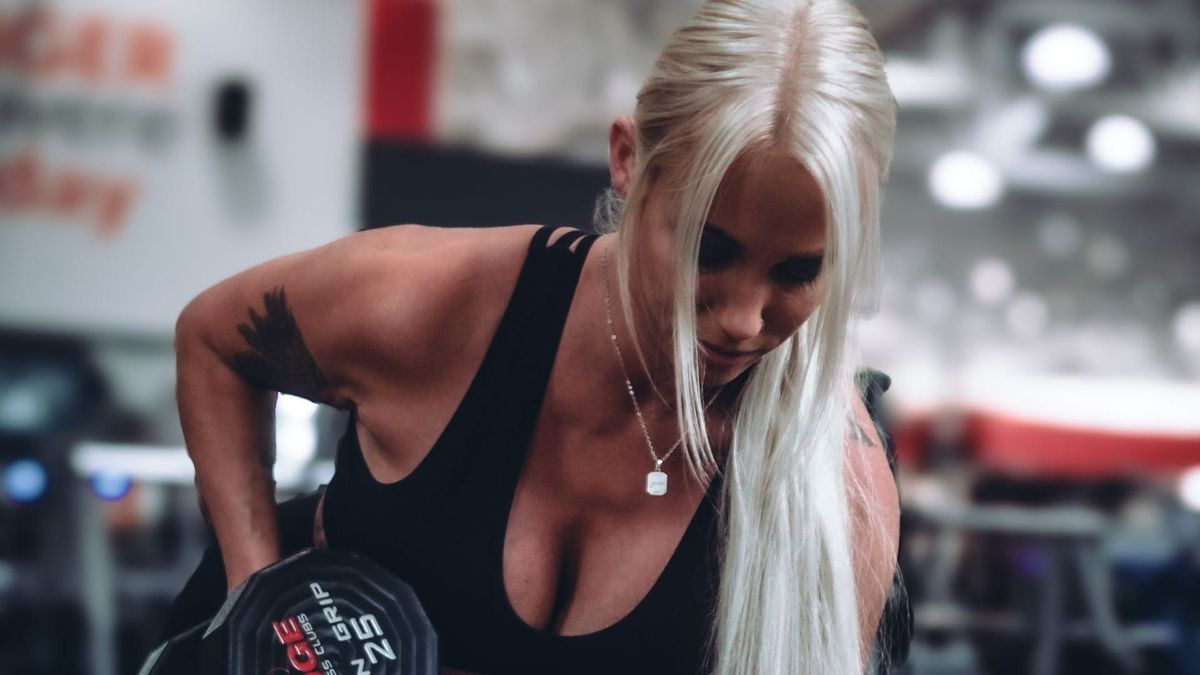
You don't need a room full of gym equipment to begin strength training. The better question is: what will you use consistently, and what will let you make exercises more challenging as you get stronger?
As an Amazon Associate, Upgrade411 earns from qualifying purchases. Prices and availability change.
Start with your constraints. If your budget is zero, bodyweight training is a genuine option. If you want equipment that fits in a drawer or suitcase, resistance bands deserve a look. If you want a straightforward way to track increasing loads, dumbbells may be easier to manage. None is automatically best for everyone.
There's a free AI accountability-coach prompt at the bottom of this guide — copy it into ChatGPT, Claude, or Muse and it will check in on you after each session.
BODYWEIGHT: THE $0 START
Bodyweight exercises use your own mass and leverage. Wall or incline push-ups, chair-supported squats and controlled step-ups can be scaled to many starting levels. They eliminate the purchase barrier, but some movement patterns are harder to progressively overload without equipment. A sturdy floor surface and appropriate support matter more than a shopping cart. Best for people testing a routine, with limited budgets, or who prefer simplicity. Skip advanced movements until you can perform their easier versions with control.

Image: Man doing push-ups on an exercise mat at home. Photo: Antoni Shkraba / Pexels.
Want a coach to keep you honest? The AI accountability prompt at the bottom of this article does the check-ins for you.
RESISTANCE BANDS: SMALL SPACE, FLEXIBLE RESISTANCE
Bands are compact and useful for rows, presses, lower-body work and assisted exercises. Their resistance changes as they stretch, so the number printed on a band is not necessarily equivalent to a dumbbell's fixed weight. Anchor points, band wear and latex sensitivity can matter. A complete kit may be useful, but mini loops, long loops and tube bands are not interchangeable. Best for travel, small spaces and people who want portable resistance. Check the exact contents and safe anchoring instructions before buying.

Image: Woman in sportswear exercising indoors with a resistance band. Photo: Andry Sasongko / Pexels.
DUMBBELLS: SIMPLE LOAD PROGRESSION
Dumbbells make load easier to quantify and can support rows, presses, squats and carries. Fixed pairs are simple but take space as you add weights; adjustable models save space but differ substantially in adjustment speed, durability, dimensions and whether the listed price buys one dumbbell or a pair. Best for readers who want measurable progression and have room to handle and store weights safely. Begin with manageable resistance and sound technique, not the heaviest set advertised.

Image: Woman exercising with dumbbells in a home interior. Photo: MART PRODUCTION / Pexels.
Before you buy anything, grab the AI accountability prompt at the bottom — it asks you which method you picked and when your first session is.
QUICK DECISION GUIDE
Choose bodyweight first when cost and habit formation matter most. Choose bands when portability and storage are the main constraints. Choose dumbbells when tracking external load matters most. A mixed approach can work, but it is optional. Before paying, decide which 3–5 exercises you will actually perform two or three times weekly and whether the equipment supports those exercises.
Decided? The AI accountability-coach prompt at the bottom turns your pick into a plan with check-ins.
THE PICKS
Every pick below was verified on November 8, 2026, for exact model and package contents. Prices are estimates or the listed price at the named source, and prices and availability change — the price on the listing is the one that counts. No star ratings or review counts are printed: none was verified.
Bands
1. Bala Bands — Model RD-01-MIXD. Three woven-fabric loop bands (Light, Medium, Heavy) with a carrying case. ~$35.

2. Gymbee Resistance Bands — Model GYMB03. Three non-slip fabric loops (Light, Medium, Heavy) for glutes, thighs, and legs.

3. Whatafit Resistance Bands Set — Model AMZ-RB11. Five stackable tubes (10, 20, 30, 40, and 50 lb, up to 150 lb combined) with two cushioned handles, two ankle straps, a door anchor, a carrying case, and an exercise guide. The most complete kit in this guide.

4. REP Tube Bands with Handles — Sold individually, one resistance level per purchase. The medium orange 12 mm tube is $20.99 at REP Fitness.

5. Serious Steel Assisted Pull-Up Bands — Model SBSS. Four 41-inch loop bands, #1–#4, covering 5–120 lb combined (Purple 5–35 lb, Red 10–50 lb, Blue 25–80 lb, Green 50–120 lb). ~$83.

6. Titan Fitness Heavy Resistance Bands — 41-inch latex loop multi-pack. Four bands: Purple 25–80 lb, Green 50–120 lb, Blue 60–150 lb, Orange 70–170 lb. $96.97 at Titan Fitness.

7. Healthy Seniors Chair Exercise Program — Two resistance bands (light and medium) with soft-grip handles and a printed exercise guide, designed for seated workouts — including rehab and limited-mobility use.

Dumbbells
8. PowerBlock Elite EXP Stage 1 — 5–50 lb pair, 16 settings in 2.5-lb increments, with magnetic selector pin and adder weights. Expandable to 70 lb and 90 lb with separately sold kits. ~$399.

9. Lifepro PowerFlow Plus — Model LP-PWRFLWPLS. 5–25 lb pair with two racks, twist-to-select in 5-lb steps. $189.99 at Lifepro. (Note: this ASIN carries other size variants — make sure the listing shows the 5–25 lb pair.)

10. Lifepro PowerUp — Model LP-PWRUP-BLK. 2.5–15 lb pair with storage rack, six settings, slide-to-select. A light starter pair — best for true beginners. $129.99 at Lifepro (listed at $189.99).

11. Northdeer Adjustable Dumbbells — 10 lb pair (2×10 lb, standard finish). Each dumbbell adjusts 5, 7, 8, or 10 lb by removing plates. A compact fixed-range set.

12. REP QuickDraw — 5–30 lb pair with cradles, 2.5- and 5-lb increments, expandable to 60 lb per dumbbell with add-on weights. $335.99 at REP Fitness.

13. Echelon Strength 752 with Stand — 7–52.5 lb pair with stand and tablet holder, 12 settings, locking-pin quick adjustment. A full station rather than just a pair.

WHAT WE WOULD BUY FIRST
For a true beginner, buy nothing until you've tested a basic bodyweight routine for two weeks. The habit is the purchase that matters, and bodyweight costs nothing to test.
For someone prioritizing travel or a small space, the Whatafit Resistance Bands Set — the complete kit, and it packs down to almost nothing. If you want the simplest possible start, the Bala Bands three-loop set (~$35) does the job with no learning curve.
For someone wanting quantified progression, the REP QuickDraw 5–30 lb pair ($335.99 at REP Fitness) is the main pick — a real pair with cradles and room to grow to 60 lb. If you want more headroom, the PowerBlock Elite EXP Stage 1 (5–50 lb pair, ~$399) goes further and expands to 90 lb. If you're starting light, the Lifepro PowerUp 2.5–15 lb pair ($129.99 at Lifepro) is the honest beginner buy.
SAFETY AND DISCLOSURE
Inspect bands for damage before each use; secure anchors according to manufacturer instructions; keep resistance within a controlled range; and seek individualized advice if you have an injury or condition affecting exercise. As an Amazon Associate, Upgrade411 earns from qualifying purchases. Prices and availability change. This article is an editorial guide, not a hands-on test report.
Your AI accountability coach — copy, paste, and make it yours
Paste this into your AI tool (ChatGPT, Claude, or Muse) and fill in the brackets. It turns the tool into a coach that checks in on you, not just a plan on a page.
You are my strength-training accountability coach. I'm a beginner, and my method is [bodyweight / resistance bands / dumbbells]. I train 3 days a week — [Monday / Wednesday / Friday] — for about 25 minutes, following this plan: [paste your week's plan from above].
Your job:
1. Check in with me after each scheduled session (or the next morning if I don't report in). Ask how it went — what I did, what felt hard, what felt good.
2. Encourage me honestly. Celebrate what I actually did, even if it's small. Never guilt me for a missed session — help me reset and do the next one.
3. Keep me on track. If I miss a day, give me one small next step instead of a lecture. If I finish a full week, help me pick the next progression (one more rep, a harder variation, or a heavier weight).
4. Remind me why I started. My reason is: [write one sentence — e.g. "I want to carry groceries without getting winded" or "I want to feel strong again"].
5. Keep it short. Each check-in should be a few lines, not an essay. End every check-in with one question: "What's your next session, and when?"
Start by asking me which method I picked and what day my first session is.