Is Buy Now, Pay Later a Black Friday Trap?
Black Friday Week is here, and the 'four easy payments' button is waiting at every checkout. Before you tap it, here is what those four payments really cost — and the simple test that tells you whether to use them or skip them.


As an Amazon Associate, Upgrade411 earns from qualifying purchases. Prices and availability change.
How Buy Now, Pay Later Actually Works
Buy now, pay later is a small loan dressed up as a checkout button. The most common version is pay in 4: the first quarter at checkout, then three more equal payments every two weeks, for about six weeks in total. Pay on time and the standard plan charges no interest and no fee. The lender pays the store in full the day you buy, so from that moment you owe the lender, not the store.
Klarna, Affirm, and Afterpay appear at most big retailers, including Amazon; PayPal offers its own Pay in 4. Approval usually takes seconds and involves a soft credit check, which does not affect your score.
Pay in 4 is only half the product now. Every big provider also sells longer monthly plans: Klarna Pay over time and Afterpay Pay Monthly run 3 to 24 months at 0% to 35.99% APR; Affirm's run up to 36 months at 0% to 36% APR. The short plan is usually free on time. The long plan can charge real interest, and the monthly payment hides the total.
And "free" is doing a lot of work: stores pay the lender about 2.49% of each sale on average (2021, Consumer Financial Protection Bureau).
| Provider | Pay in 4 | Late fee | Longer plans | Credit reporting |
|---|---|---|---|---|
| Klarna | 0% if on time | Up to $7, capped at 25% of the order | 3–24 months, 0–35.99% APR | Longer plans reported; Pay in 4 not |
| Afterpay | 0% if on time | Up to $8, capped at 25% of the order | 3–24 months, 0–35.99% APR | Not reported in the U.S. |
| Affirm | 0% if on time | None | Up to 36 months, 0–36% APR | All plans reported from April 2025 |
Tip: the AI coach prompt at the bottom is your daily check-in.
Where It Helps
It solves a real timing problem. Your paycheck lands on the first and the fifteenth, and the deal you want ends on the thirtieth. Splitting a purchase you already budgeted for across two paydays is reasonable, and it beats carrying it on a credit card at 20%-plus interest for three months.
It also works when the split changes nothing about whether you can afford it. A $200 item you have $200 set aside for, split into four $50 payments, costs you $200 either way. And for shoppers without a credit card, or with a thin credit file, pay in 4 opens a checkout that would otherwise be closed.
The honest test: if the price was already in your budget and the payments land on weeks when money is in the account, the tool is doing its job. The trouble starts when the split makes an unaffordable purchase feel affordable.
Where It Bites
The first bite is the late fee. Klarna charges up to $7 per missed payment after a 10-day grace period; Afterpay charges up to $8 per missed installment. Both cap late fees at 25% of the order. Affirm charges no late fees at all. But that is only half the story: if autopay hits a short account, your bank can charge its own overdraft fee on top. In the Federal Reserve's 2025 household survey, 11% of users had a payment trigger an overdraft fee.
The second bite is stacking. A Consumer Financial Protection Bureau study from January 2025 found about 63% of borrowers had more than one buy now, pay later loan open at once, and about a third had loans from more than one company. Three $200 plans started the same week mean $150 at checkout, then $150 every two weeks, three more times — $600 in total. In the Fed's 2025 survey, 26% of users paid late at least once, and 17% were charged extra.
The third bite is the protection you think you have. In May 2024 the Consumer Financial Protection Bureau issued a rule treating buy now, pay later lenders like credit card issuers — dispute rights, refunds for returned products, billing statements. On May 12, 2025, the Bureau withdrew that rule and said it does not intend to reissue it. There is currently no guaranteed federal right to dispute a buy now, pay later charge the way you can dispute a credit card charge. If a purchase arrives broken or never arrives, your refund depends on the lender's terms and your state law.
The fourth bite is your credit file. Affirm now reports all of its plans to Experian, and to TransUnion for plans started after May 1, 2025, so a missed Affirm payment can show up. Klarna generally does not report pay in 4, but does report longer loans. Afterpay generally does not report to U.S. bureaus at all. FICO launched new scores in June 2025 that can include this data, but most scores today still do not count it.
Adobe Analytics counted $20.0 billion in buy now, pay later spending across the 2025 holiday season, up 9.8%, and $1.03 billion on Cyber Monday alone. Amazon's Black Friday Week runs November 19 to 30, 2026.
The Smarter Way to Use It
Run the pay-in-full test first. Could you pay the full price today without touching money set aside for rent, bills, or food? If not, the plan is not a budgeting tool. It is debt — walk away or wait. If yes, the plan is just a schedule, and a schedule you control is fine.
Keep it to one plan at a time. One plan is four dates; two plans are eight dates set by two different companies on two different clocks. Write every payment date in your calendar at checkout.
Keep a cushion in the account autopay pulls from. A late fee of $7 or $8 is annoying; an overdraft fee on top is the real cost. If your checking balance regularly dips near zero before payday, pay in full or skip the purchase.
Know the return rules before you buy. Amazon's 2026 holiday return window covers purchases made November 1 through December 31, returnable through January 31, 2027 (Apple products through January 15, 2027). But a return to the store is not the same as a refund from the lender: until the store's refund goes through, the plan can keep taking payments, so keep the money in the account until the refund lands. Screenshot the lender's terms at checkout and keep your receipt.
Quick Decision Guide
Choose pay in 4 when the purchase was already in your budget, you could pay in full today, and the dates land on weeks when money is in the account.
Choose pay in full when you want the strongest return and dispute protection, or when the purchase is small.
Choose a credit card when the purchase is expensive or might need returning — the federal dispute process is worth more than the split. Pay the card in full and the interest is zero too.
Choose to wait when the split is the only reason the purchase feels affordable, or when you already have a plan running. The deal will come back. The debt does not wait.
The Picks
These tools do not make buy now, pay later safe — they make the habit behind it stronger. Prices re-checked November 21, 2026; check current price before you buy.
Learn the system
- Atomic Habits by James Clear — Hardcover, Avery, October 16, 2018, 320 pages. Tiny changes compounding into a different life. ~$18 ($18.22 at Target). Check current price.
- The Psychology of Money by Morgan Housel — Paperback, Harriman House, September 8, 2020, 256 pages, 19 short stories on wealth, greed, and happiness. How little of money is math and how much is behavior. ~$11 ($10.99 at Target). Check current price.
- I Will Teach You to Be Rich by Ramit Sethi — Second Edition paperback, Workman Publishing, May 14, 2019, 352 pages, a six-week program. Automate savings, investing, and bills, then spend the rest guilt-free. $16.99 list at Barnes & Noble. Check current price.
Build the habit
- Kindle Paperwhite (16GB) — 12th generation, October 2024 release, 7-inch glare-free display with warm light, waterproof, weeks of battery life. $129.99 Black Friday price at Abt (list $199.99). Check current price.
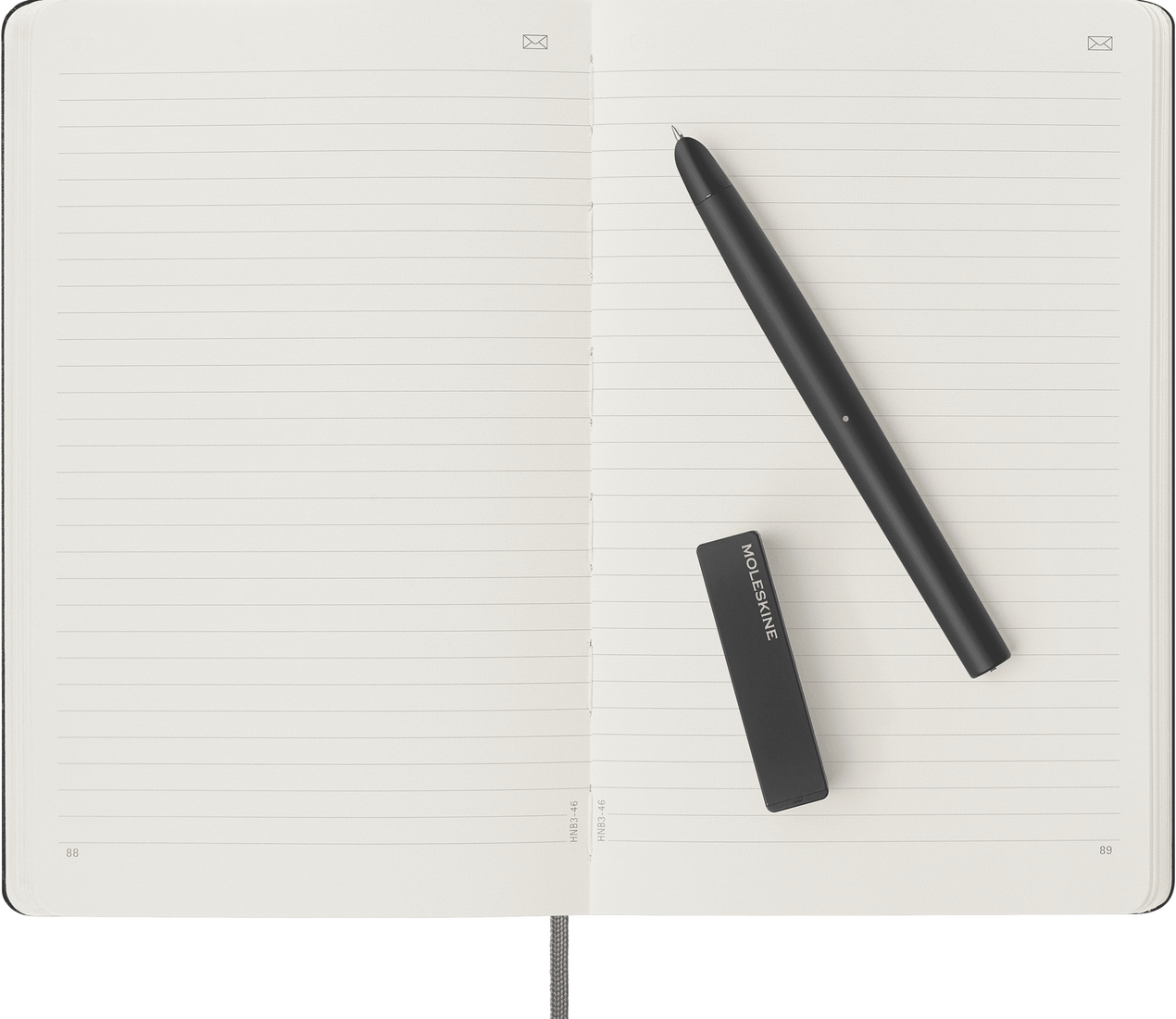
- Moleskine Smart Writing Set — Smart Pen plus large ruled Smart Notebook, ink refill, magnetic charger, and the Moleskine Notes app. Handwriting that syncs to your phone turns a paper budget into a searchable plan. $279.00 listed at moleskine.com. Check current price.
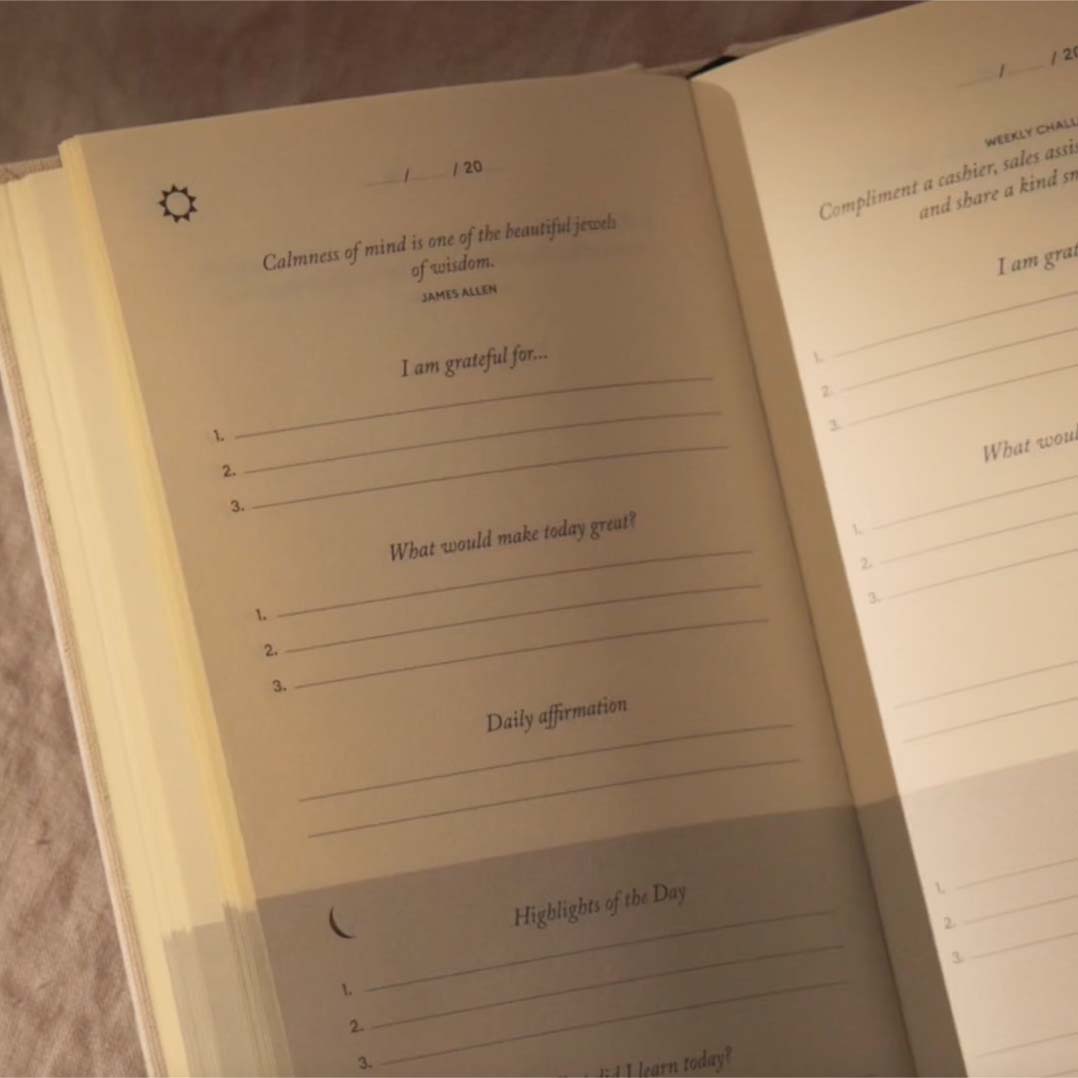
- Five Minute Journal — Original daily gratitude journal by Intelligent Change, undated, with morning gratitude and intention prompts and an evening reflection, about six months of pages. Five minutes a day is the smallest honest money check-in. ~$30 ($29.99; $32.00 at intelligentchange.com). Check current price.
What We Would Buy First
If you buy one thing from this list, make it The Psychology of Money. At about $11 it is the cheapest pick here, and it fixes the part no payment plan can touch: how you think about money when a deal is flashing in front of you. Read it before Black Friday, not after.
If you want one daily tool instead, pick the Five Minute Journal: the morning prompt is a natural place to write the one money move for the day.
Weekly Plan
Black Friday is Friday, November 27. One short step a day, one video a day.
Saturday, November 21 — Learn how it works. Watch Buy Now, Pay Later Explained: The Hidden Risks of Pay in 4 (and When It Becomes a Trap) (about 11 minutes).
Sunday, November 22 — Count your stack. Write down every active plan and payment date. Then watch Buy Now, Pay Later Trap — 11% Get Overdraft Fees (Explained) (about 6 minutes) on how three small plans become a $600 stack.
Monday, November 23 — Learn your provider's terms. Watch What Is Klarna and How Does It Work? Pay in 4, Credit Check, Interest and Fees (about 5 minutes). Screenshot its late-fee and return terms.
Tuesday, November 24 — Run the holiday check. Watch Buy Now, Pay Later Explained: The Fine Print Before You Split a Holiday Purchase (about 6 minutes) and run its five-question check on every item on your list.
Wednesday, November 25 — Do the stacking math. Watch Buy Now, Pay Later Explained: What Four Easy Payments Add Up To (about 3 minutes), then total every payment due in the next six weeks.
Thursday, November 26 — Thanksgiving. No shopping homework — your list, calendar, and coach prompt are done.
Safety and Disclosure
This article is education, not financial advice. Terms vary by lender, so read the terms at your own checkout before you agree. If a plan has already gone wrong, contact the lender in writing, keep copies, and if you are still stuck, file a complaint at consumerfinance.gov/complaint and with your state attorney general.
As an Amazon Associate, Upgrade411 earns from qualifying purchases. Prices and availability change.
AI Accountability-Coach Prompt
Copy the template below into your notes app or AI assistant, fill in the brackets, and use it every morning through Black Friday Week.
You are my accountability coach for holiday spending. Be direct and do not let me off the hook.

My Black Friday Week budget is $[___]. My one planned purchase is [___] at $[___].
My rule is: [one plan at a time, and only if I could pay in full today].
My active plans and payment dates are: [___].
My autopay account is [___], and my cushion in it is $[___].

Every morning, ask me these five questions:
1. What is today's one money move, and when will I make it?
2. Is any payment due this week more than the money I will have left?
3. Did I open any new plan yesterday? If so, why?
4. Is anything on my list failing the pay-in-full test?
5. What did I spend yesterday that was not on my list?

End every check-in with: "What is your next money move, and when will you make it?"