Stop Rehearsing the Holidays in Your Head
Thanksgiving is ten days away, and your brain is already running the dress rehearsal — the conversations, the plans, the worst cases. Here is how to break the loop before Thursday does it for you.


As an Amazon Associate, Upgrade411 earns from qualifying purchases. Prices and availability change.
There is a free AI accountability-coach prompt at the bottom of this guide — it will check in on you after each practice day.
1. Write It Down Once
The rehearsal loop survives because it never gets written down. A worry that stays in your head can be replayed forever, because nothing ever closes it. Writing it down once changes the job: once a fear is on paper, your brain can stop carrying it. Each morning, take five minutes and write the one holiday moment you keep replaying, what you would do if it happened, and three things that would make today good.
Best for anyone whose holiday worry shows up at 2 a.m. Watch out for: turning the journal into a second rehearsal. If the same fear shows up four mornings running, write the action instead.
Watch: My Morning Routine: The Five Minute Journal, Project Life Mastery — https://www.youtube.com/watch?v=NyG6xYhdQJc
2. Borrow a Stoic Frame
Marcus Aurelius never planned a Thanksgiving dinner, but he knew this loop. Each morning he reminded himself: the day would bring difficult people and things outside his control, and his job was to meet them, not prevent them. The rehearsal habit is a control problem: your brain tries to manage Thursday by living it in advance. Read one short passage each morning and ask what is actually in your hands. What is yours gets a plan; what is not gets released.
Best for anyone who replays other people's reactions. Watch out for: using Stoicism as a reason to swallow everything — spend your energy on the parts you can steer, not the parts you cannot.
Watch: Stoicism: Meditations and the Wisdom of Marcus Aurelius, Academy of Ideas — https://www.youtube.com/watch?v=wf-7i3UmTzU
3. Read Instead of Replaying
The rehearsal loop needs empty time to survive. It fills the quiet hour before bed, the drive, the grocery line — every gap where your brain has nothing better to do. Reading is the simplest way to take those gaps back. Not doomscrolling. A book, in your hands, that asks for your full attention. Thirty pages and the loop has nowhere to stand. Pick a time, protect it like a meeting: phone in another room, book open, one chapter minimum.
Best for anyone whose rehearsal happens at night, in bed, with the phone glowing. Watch out for: reading about the holidays — a book about hosting is just the rehearsal with a cover on it. Pick something unrelated.
4. Understand Why Your Body Replays It
The rehearsal is not just in your head. It lives in your body — the tight shoulders, the shallow breathing when the group chat lights up, the stomach that knots at one relative's name. Your nervous system learned to brace for the holidays — and bracing feels like preparing, even when it is just suffering in advance. When the loop starts, name it: this is bracing, not planning. Shoulders down. One slow breath. Feet on the floor. Is there an action here, or just the brace? If there is one, do it. If not, the breath is the whole response.
Best for anyone who feels the holiday in their body before they think it. Watch out for: treating a book as a diagnosis — it is a starting point, not a substitute for professional care.
5. Make the New Loop Tiny
Most attempts to break a habit fail the same way: the replacement is too big. You decide on thirty minutes of meditation, an hour of journaling, a chapter every night — starting Monday, while also cooking and hosting. By Wednesday it has collapsed and the loop is back in charge. The loop is small and automatic, so whatever replaces it has to be smaller: two minutes of writing, one page of reading, one slow breath. A two-minute habit gets done on the worst day of the week. Stack it onto something you already do: journal while the coffee brews.
Best for anyone whose grand plans have collapsed by Tuesday. Watch out for: the upgrade trap — when two minutes feels easy, your brain will suggest twenty. Do not take the offer.
Watch: James Clear Atomic Habits Book Summary, Best Book Bits — https://www.youtube.com/watch?v=co0lYRlOniU
Picked your method? The AI accountability-coach prompt at the bottom turns it into a plan with check-ins.
6. Sit Still for Five Minutes
The rehearsal loop hates stillness. It needs motion — the pacing, the scrolling, the planning — to keep its shape. Sit still for five minutes and the loop has to show itself for what it is: a voice, repeating, with nothing to stand on. Five minutes of sitting feels like doing nothing — but the five minutes are not empty. A cushion in the same corner every morning makes the practice a location you go to, not a task you remember. Sit, set a timer, let the thoughts come without following them. The practice is noticing, and coming back.
Best for anyone who has never meditated and assumes it is not for them. Watch out for: making the sit a performance. You need a seat and five minutes — the cushion is a tool, not a test.
The Rehearsal Loop, Mapped
Every loop has a trigger, a script, and an exit:
| Trigger | What the loop sounds like | The break |
|---|---|---|
| 2 a.m., wide awake | The same conversation, replayed | Write it down once — the journal |
| The group chat lights up | Everyone else's reactions, predicted | Borrow a Stoic frame — what is actually yours |
| The quiet hour before bed | The worst case, on repeat | Read instead of replaying — one chapter |
| One relative's name comes up | Shoulders up, breath shallow | Name the brace — the body check |
| Monday, big new plan | A grand fix that collapses | Make the new loop tiny — two minutes |
| Sunday morning, nothing scheduled | Restless planning | Sit still for five minutes — the cushion |
Quick Decision Guide
Choose the journal first when the loop wakes you up at night; the Stoic frame when you rehearse other people's reactions; reading when the loop fills your evenings; the body check when you feel it in your shoulders; the tiny loop when grand plans have failed you; sitting still when you want the smallest possible start. Pick one method today, add the next tomorrow.
The Picks
Every pick below uses a verified catalog ASIN, with prices as estimates from the playbook catalog. No star ratings or review counts are printed — none was verified. Check current price before buying.
Write it down once
1. The Five Minute Journal (Original Linen) by Intelligent Change — A guided gratitude journal with the same few prompts every morning and night: three gratitudes, what would make today great, one affirmation — then three good things at night. Its job here is the five-minute morning where the rehearsal gets written down once, instead of replayed all day. Undated, so a missed day leaves no empty page. Price: ~$30. Check current price.

Borrow a Stoic frame
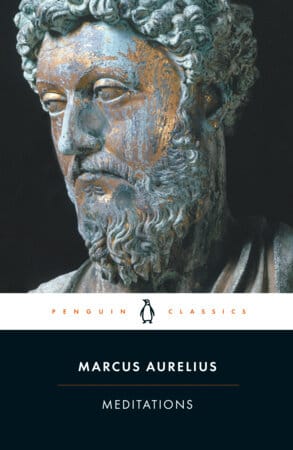
2. Meditations by Marcus Aurelius (Penguin Classics, translated by Martin Hammond) — The emperor's private notebooks, 304 pages, introduction by Diskin Clay. Its job here is the morning frame: ten minutes that sorts what is yours from what is not. Short passages — easy to pick up for one sitting and put down again. Price: ~$12. Check current price.
Read instead of replaying
3. Kindle Paperwhite (16GB) — Amazon's 16GB e-reader: 7-inch glare-free 300 ppi display, adjustable warm light, IPX8 waterproofing, weeks of battery. Its job here is the whole quiet library in one thin device — and it keeps notifications out of the reading hour. Price: ~$200. Check current price.

Understand why your body replays it
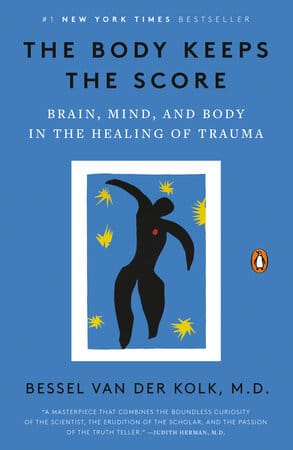
4. The Body Keeps the Score by Bessel van der Kolk, M.D. (Penguin Books paperback) — A book about how stress and trauma live in the body, and how it recovers. Its job here is perspective: the holiday pressure you feel in your chest and shoulders is real, and it is not a character flaw. Read a chapter before the gathering, not during it. Price: ~$19. Check current price.
Make the new loop tiny
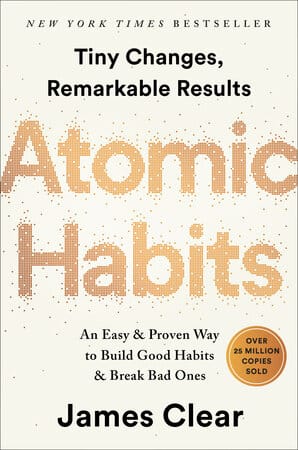
5. Atomic Habits by James Clear (Avery hardcover) — A book about tiny changes and the systems that make them stick — the method behind all six practices. One tiny habit per method is enough. Price: ~$19. Check current price.
Sit still for five minutes
6. Meditation Cushion (Zafu) — A round zafu cushion for a seated daily practice. Its job here is the place itself: a dedicated seat that makes the five-minute pause a spot you go to. Sit on it before the house wakes up. Price: ~$40. Check current price. No product photo is included with this pick: no image could be verified as this exact model from a non-Amazon source.
What We Would Buy First
On a tight budget, start with Meditations — the cheapest pick, and the Stoic frame protects all the others. If the loop wakes you up at night, start with The Five Minute Journal — five minutes of writing holds the whole week together. If you want one device, start with the Kindle Paperwhite — every book on this list, in one pocket-sized device.
Your Thanksgiving Week Plan
Monday, November 23 — Write it down once. Open the journal: the one holiday moment you keep replaying, in one sentence, plus what you would do if it happened.
Tuesday, November 24 — Borrow the frame and read. Ten minutes of Meditations in the morning; one unrelated chapter in the evening, phone in another room.
Wednesday, November 25 — Make it tiny and sit still. Five minutes on the cushion before the house wakes up, two-minute versions of everything, and a chapter of The Body Keeps the Score in the evening.
Thursday, November 26 — Thanksgiving. Five minutes on the cushion before anyone else is up, journal open, three things that would make today great. Then cook the meal, greet the people, and let the day be the day.
Safety and Disclosure
The Body Keeps the Score discusses trauma and recovery; if the holidays bring up difficult material, consider talking with a clinician or a trusted support person rather than working through it alone. As an Amazon Associate, Upgrade411 earns from qualifying purchases. Prices and availability change. This article is an editorial guide, not a hands-on test report.
Your AI accountability coach — copy, paste, and make it yours
Paste this into your AI tool and fill in the brackets.
You are my holiday-rehearsal accountability coach. My method is [write it down once / borrow a Stoic frame / read instead of replaying / understand the body loop / make the new loop tiny / sit still for five minutes]. I practice every day this week — [your days, e.g. Monday through Thursday] — following this plan: [paste your week's plan from above].
Your job:
- Check in after each practice day. Ask how it went — what I did, what felt hard.
- Encourage me honestly. Celebrate what I actually did, even if it's small. Never guilt me for a missed day — help me reset.
- Keep me on track. If I miss a day, give me one small next step.
- Remind me why I started. My reason is: [write one sentence — e.g. "I want Thursday to feel like a holiday, not a rehearsal"].
- End every check-in with one question: "What's your next session, and when?"
Start by asking me which method I picked.