The Holidays Will Test Your Boundaries. Practice Now.
The holidays will test your boundaries — so practice now. Thanksgiving is November 26, sixteen days away. Start with three practices this week: the pause, the pre-decided no, and the calendar block.


This post contains affiliate links. If you purchase through our links, we may earn a commission at no extra cost to you. We only recommend products we've researched and would use ourselves.
Why the Holidays Test Every Boundary You Have
Thanksgiving lands on Thursday, November 26, 2026 — sixteen days from now. After that, the calendar fills fast: family dinners, office parties, and gift lists. Every request sounds small on its own; together, they make "just one more thing" the season's unofficial motto.
The holidays will test your boundaries — that is the pattern, every single year. The good news: boundaries are a skill, and skills get stronger with practice. Start now, while the stakes are low, so the holiday nos come easier when they count.
The holiday stretch is a perfect storm for overcommitment. The asks come from every direction: family expects you at the table, work expects you at the party, friends expect you at the gift exchange — and the calendar expects you in three places on the same Saturday. None is unreasonable alone; together, they make a season where time stops being yours.
What makes it harder is that holiday asks come wrapped in tradition and affection. Saying no to a Tuesday meeting is easy; saying no to your mother, your boss, or a twenty-year family tradition feels like saying no to the people themselves. That is why the holidays are the hardest time to hold a line — and the worst time to start practicing.
Most people walk into December with no plan: yes to the first invitation, yes to the second because the first made refusal feel rude, yes to the third because they have stopped counting. By mid-December they are exhausted, wondering how gratitude became obligation. The problem was never one big ask — it was twenty small ones, accepted one at a time.
A Boundary Is a Skill, Not a Personality Trait
Some people seem naturally good at saying no. Look closer: they are not braver than you, and they do not care less. They have simply had more practice. A boundary is not a trait you either have or you do not. It is a skill, and like any skill, it gets easier with reps.
That is the argument for starting now, in November, while the asks are still small. Every low-stakes no is a rep: decline the optional meeting, skip the group-chat debate going nowhere, turn down the extra shift. None of these moments matters much on its own — that is the point. You are training in the shallow end so the deep end does not drown you.
Each small no teaches you something useful: the world does not end, the relationship survives, and the guilt fades within the hour. After a few dozen reps, the holiday no stops feeling like a confrontation and starts feeling like a sentence you already know how to say. The Stoics put it plainly: you cannot control what people ask of you, only what you agree to. A short daily read like Meditations by Marcus Aurelius keeps that distinction in front of you — check current price if you want the classic boundary book on your shelf.
Three Practices to Start This Week
You do not need a new personality before Thanksgiving — just three practices, started this week, repeated until they feel boring. Boring means automatic, and automatic is what holds up under holiday pressure.
1. The Pause. Never answer a big ask on the spot — your first sentence is always the same: "Let me check my calendar and get back to you." Twenty-four hours between the ask and the answer changes everything: in the moment, the pressure peaks — but a day later you can answer from your actual calendar, energy, and priorities. The pause is not stalling. It is the difference between a decision and a reflex.
2. The Pre-Decided No. Decide your nos before the invitations arrive, while you are calm: no more than two gatherings per weekend, no hosting both Thanksgiving and Christmas, no Christmas Day travel. Write them down. A boundary decided in advance is far easier to hold than one invented under pressure. When the invitation comes, you are keeping a promise you already made to yourself.
3. The Calendar Block. Open your calendar now and block your rest days before anyone else claims them: one full day per weekend between Thanksgiving and New Year's, marked busy. Treat those blocks like appointments — because they are. A blocked Saturday is a boundary with a calendar entry, and it is much harder to argue with a calendar than with a feeling. The season does not leave gaps. You have to make them.
When the Pressure Comes Anyway
Even with practice, someone will push back. Expect it — it usually sounds like guilt: "But it's family." "We only do this once a year." "Everyone else already said yes." None of those sentences changes your calendar — they are pressure, not a good argument.
When it comes, keep your response short: repeat the no once, in the same words, without adding new reasons. Offer an alternative only if you genuinely want to — you cannot host, but you can bring dessert. Do not over-explain: every extra reason is another opening for negotiation, and you are not negotiating.
One more thing: these are general wellbeing practices for an overcommitted season, not treatment for anything. If stress, anxiety, or low mood is persistent, or the holidays reliably leave you overwhelmed, talk to a professional. A book or a journal can support a practice — it cannot replace a clinician. Knowing the difference is itself a boundary.
The 6 Picks at a Glance
| Product | Best for | Why it made the list |
|---|---|---|
| Meditations by Marcus Aurelius | The stoic boundary book | Daily passages on what you control and what you do not |
| Five Minute Journal | Keeping priorities visible | A two-minute check-in that anchors the day |
| Kindle Paperwhite (16GB) | Carrying the reading habit anywhere | Your boundary books in your bag, on the plane |
| The Body Keeps the Score | Understanding stress responses | A widely read guide to how pressure lands in the body |
| Meditation Cushion (Zafu) | A dedicated spot for the pause | One anchor that turns the pause into a daily habit |
| Atomic Habits by James Clear | Small practices, kept daily | The system for making tiny practices stick past week two |
Our Top Picks
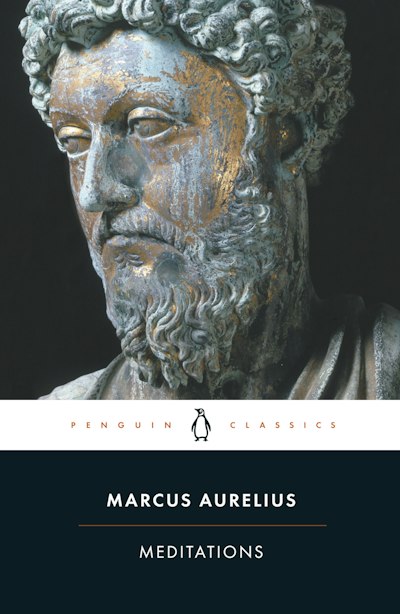
1. Meditations by Marcus Aurelius — the stoic boundary book. The private notebook of a Roman emperor, reminding himself what he could control and what he could not. It is for you if you want a two-minute morning read that steadies the day before the asks start. Its job: keep the line between your business and everyone else's visible, one passage at a time. Check current price.

2. Five Minute Journal — a daily check-in that keeps your priorities visible. A guided journal with three morning and three evening prompts, five minutes total. It is for you if your mornings disappear into other people's agendas before you have had a thought of your own. Its job: put your priorities on paper first, so the day's requests have competition. Check current price.

3. Kindle Paperwhite (16GB) — carry the reading habit anywhere. The waterproof e-reader with a glare-free screen and weeks of battery life. It is for you if your reading habit dies the moment you leave the house. Its job: keep your boundary books with you — on the plane, in the waiting room, in the quiet minutes before family arrives. Check current price.

4. The Body Keeps the Score by Bessel van der Kolk — understanding stress responses. The widely read book on how stress shows up physically — the tight chest, the clenched jaw, the exhaustion sleep does not fix. It is for you if your body says no before your mouth does. Its job: help you spot overload earlier, so you can pause before you overcommit. Check current price.
5. Meditation Cushion (Zafu) — a dedicated spot for the pause practice. A round floor cushion that gives your daily pause a fixed place at home. It is for you if the pause practice keeps sliding off your schedule because it has nowhere to live. Its job: one spot, same time each day — the pause becomes a habit, not a reminder you keep snoozing. Check current price.

6. Atomic Habits by James Clear — small practices, kept daily. The bestselling guide to building habits through tiny, repeatable steps. It is for you if you start strong and fade by week two. Its job: the system for keeping small practices daily — the same logic as the small no, applied everywhere else. Check current price.
The Bottom Line
The holidays will test your boundaries — that is a given. Whether you walk in practiced or unpracticed is decided in the next sixteen days, not on Thanksgiving morning. Start with the three practices — the pause, the pre-decided no, the calendar block — use this week's low-stakes moments as reps, and pick one tool above that makes the practice easier to keep.
A boundary held in November is a holiday you actually enjoy in December. Say the small nos now, so the big ones come easy later.