Best Recovery Tools Under $200
Your workouts don't make you stronger — your recovery does. We researched the most effective at-home recovery tools you can get without blowing your budget, and narrowed the field to six that actually earn their spot in your routine.

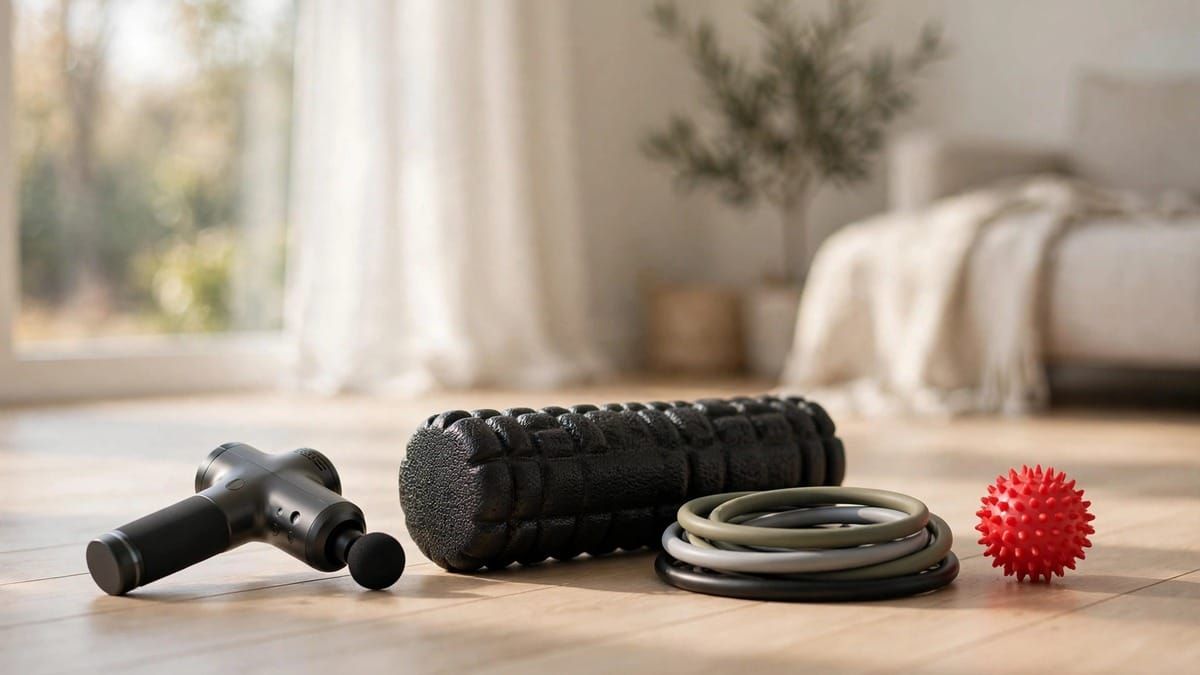
Best Recovery Tools Under $200
Your workouts don't make you stronger — your recovery does. We researched the most effective at-home recovery tools you can get without blowing your budget, and narrowed the field to six that actually earn their spot in your routine.
This post contains affiliate links. If you purchase through our links, we may earn a commission at no extra cost to you. We only recommend products we've researched and would use ourselves.
Theragun Mini Plus
The mini that acts like a full-size gun. This compact percussive massager brings serious power to a device small enough to toss in a gym bag, with a brushless motor that stays noticeably quiet — apartment-friendly at night — plus multiple speeds and attachments for different muscle groups. Use the round head for large muscles like quads and glutes, the bullet for tight spots like the shoulder blade area, and spend about two minutes per muscle group after training. It's the one tool here we'd grab if we could only keep one: percussion therapy genuinely speeds up post-workout looseness, flushes out that heavy-legs feeling, and reduces next-day soreness for most people. On rest days, a quick five-minute session boosts blood flow to recovering tissue without adding training stress. Check the current price before you buy — it sits comfortably inside our budget line. Check the current price on Amazon.
LifePro Sonic Percussion Massage Gun
Percussion therapy without the premium price tag. The LifePro Sonic delivers deep-tissue vibration with adjustable intensity levels and a set of interchangeable heads, covering legs, back, shoulders, and arms. Start on the lowest setting and work up — your calves will need more intensity than your forearms, and the right pressure is the one that feels like productive work, not punishment. The battery life is generous enough for a full week of post-workout sessions, and the included carrying case keeps the heads organized so you'll actually bring it to the gym. This is the smart entry point if you're not sure percussion therapy is for you: it delivers the core recovery benefit — faster loosening after workouts, less next-day stiffness — at a fraction of the flagship cost. Check the current price on Amazon.
TriggerPoint GRID Foam Roller
The original — and still the benchmark. The GRID's patented multi-density surface mimics a massage therapist's thumbs, fingers, and palms, targeting trigger points with rolling pressure you control yourself. Technique matters more than force here: roll slowly, and when you hit a tender spot, stop and hold for twenty to thirty seconds while you breathe. That's where the real release happens. The 13-inch length covers quads, IT bands, and the full back without awkward repositioning, and the dense core keeps its shape for years of daily use — no going flat after a month. It's easy to wipe clean, quiet enough for any room, and costs far less than a single deep-tissue session. Five quiet minutes of rolling after a workout beats scrolling your phone for twenty. Check the current price on Amazon.
Resistance Band Set (5-Pack)
Recovery isn't just lying on the couch. This five-band set with graduated resistance levels covers mobility work, warm-ups, cool-downs, and active recovery days — the kind of light, blood-flow-boosting movement that actually reduces soreness. Try this ten-minute active-recovery circuit: band pull-aparts for upper back, banded glute bridges, monster walks for hips, overhead shoulder dislocates, and slow banded good mornings. Two easy rounds gets blood moving without adding fatigue. Loop them around a door anchor or hold them for hip flexor stretches, glute activation, and shoulder mobility drills. They weigh almost nothing, travel anywhere, and the set includes handles and ankle straps for more exercise variety. If your recovery plan currently has zero mobility work, this is the easiest and cheapest place to start. Check the current price on Amazon.
Pro-Tec Athletics Spiky Massage Ball
The small tool that solves big problems. This spiky massage ball digs into plantar fascia, tight calves, and stubborn knots that a foam roller is too broad to reach. For feet: roll it under your arch for two minutes while you work or watch TV — runners and anyone who stands all day will feel the difference within a week. For glutes and the piriformis: sit on it on the floor and lean into the tight spot. For upper back: trap it between your shoulder blades and a wall, then move slowly up and down. It's cheap, nearly indestructible, and fits in a desk drawer — which means you'll actually use it, unlike the fancy gear collecting dust in the garage. Check the current price on Amazon.
Fitbit Charge 6
The smartest recovery tool on this list might be the one that tells you when to rest. The Charge 6 tracks your sleep score, sleep stages, heart rate variability, and daily readiness, turning a vague sense of fatigue into actual data. Here's how we'd use it: check your sleep score each morning, and on days it dips, swap the hard session for mobility work with the bands and roller instead of pushing through. It also logs 40+ exercise modes and gives you a clear picture of whether your training load is actually matched by your sleep. Pair it with the habits in our sleep transition guide and you get a genuinely complete recovery system — measure, then act on what you see. Check the current price on Amazon.
Our Top Pick
Theragun Mini Plus. It packs the percussion power of full-size massage guns into a travel-friendly form, runs quiet enough for shared walls, and covers every muscle group with swappable attachments. If you buy one recovery tool from this list, make it this one — then add the foam roller as your budget-friendly companion. The two together cover ninety percent of what a sports massage appointment would, at a fraction of the ongoing cost.
Quick Comparison
| Product | Best For | Why It Made the List |
|---|---|---|
| Theragun Mini Plus | Overall recovery | Quiet, powerful percussion in a portable package |
| LifePro Sonic Massage Gun | Budget percussion | Deep-tissue vibration at a value-friendly price point |
| TriggerPoint GRID Foam Roller | Daily mobility | The durable, multi-density benchmark for self-massage |
| Resistance Band Set | Active recovery | Lightweight mobility and stretch work anywhere |
| Pro-Tec Spiky Massage Ball | Targeted knots | Pinpoints trigger points and foot fascia cheaply |
| Fitbit Charge 6 | Recovery tracking | Sleep and readiness data that guides when to push or rest |
How We Chose
We prioritized tools with proven recovery benefits, strong durability track records, and a real reason to exist beyond gimmicks — everything here covers a different recovery angle so you can mix and match without overlap.
The Bottom Line
Recovery doesn't require a fancy spa membership — it requires consistency with the right tools. Start with one: a massage gun for soreness, a foam roller for daily mobility, a massage ball for stubborn knots, or a tracker to tell you when to rest. Our suggested starter routine: roll or use the massage gun for ten minutes after every workout, run the band mobility circuit on one rest day per week, and let your tracker guide when to push versus back off. Pick the gap in your routine, fill it this week, and watch your training output climb.