Electrolyte Packets: When You’re Paying for Convenience—and When You May Not Need One
A practical guide to deciding when an electrolyte packet is convenient, when water may be enough, and what to check before buying.

You get home from a hot walk, reach for a drink mix, and then notice the receipt on the counter. The useful question is not “Are electrolyte packets good or bad?” It is: what problem am I actually solving today?
Affiliate note: Upgrade411 may earn a commission from qualifying links at no extra cost to you. As an Amazon Associate, I earn from qualifying purchases.
For many ordinary days, water and regular meals are a sensible starting point. A packet or tablet can be a convenient, pre-portioned option when you specifically want one—but convenience is different from necessity.
Before changing your electrolyte or supplement routine: If you have kidney, heart, blood-pressure, or fluid-balance concerns, or take medicines that affect electrolytes, ask your clinician or pharmacist what is appropriate for you.
The short answer
Buy an electrolyte product because it makes a situation easier—not because a label makes it sound essential. If plain water is easy to carry and you are eating normally, start there. If you want a shelf-stable, no-measuring option for a travel bag or a long active day, choose the format you will actually use and check the label first.
Start with the situation, not the package
Ordinary day, normal meals
Start here: Carry water and drink to thirst.
A paid product may be useful when: You simply prefer a flavored, portioned drink.
Travel, errands, or a long day away from home
Start here: Pack water first.
A paid product may be useful when: You value compact, no-measuring backup.
You dislike powders
Start here: Compare tablet formats.
A paid product may be useful when: A tablet is easier for you to keep and use.
You have a health condition or take relevant medication
Start here: Ask a clinician or pharmacist.
A paid product may be useful when: They recommend a specific approach.
What you are usually paying for
The value is often practical: portioning, portability, flavor, and not having to measure anything. Compare serving size, the ingredients that matter to you, product format, whether you will actually carry it, and the current per-serving cost from the live listing.
Three practical choices to compare
These are format examples, not medical recommendations. Product labels, availability, and pricing change; review the live listing and label before buying.
| Option | Format | Best fit | Upgrade411 take |
|---|---|---|---|
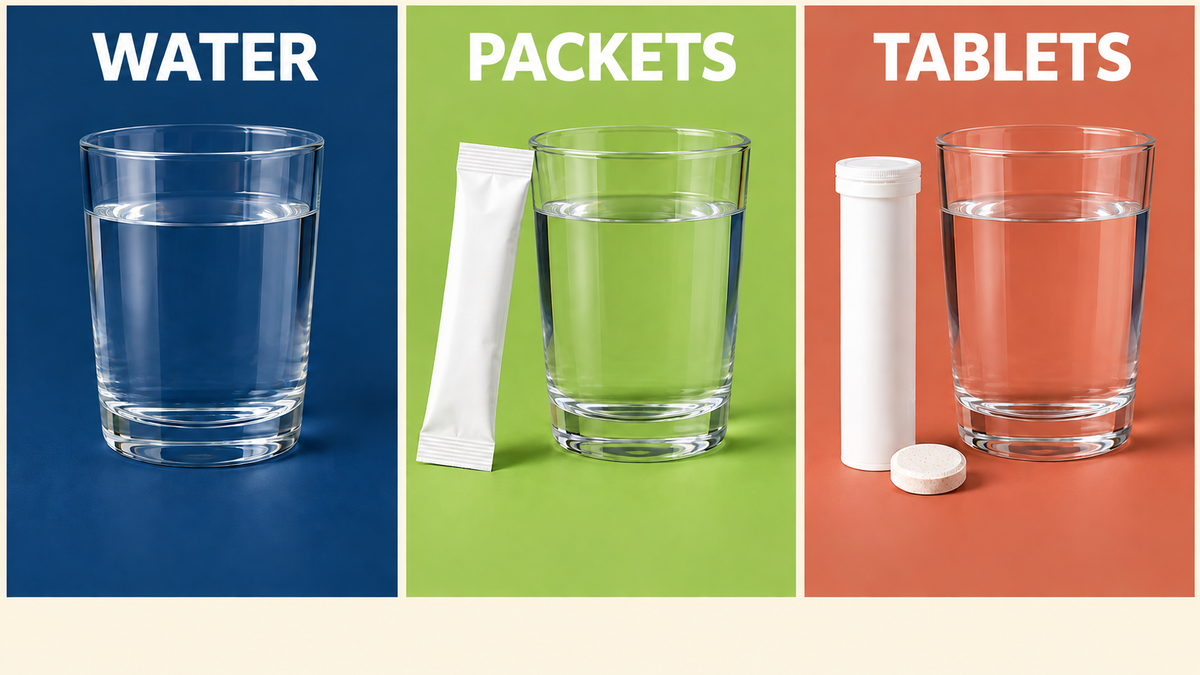
| Liquid I.V. Sugar-Free Electrolyte Packets | Single-serve stick packs | Pre-portioned powder in a bag or drawer | Convenience-first; compare live cost per serving. |
| Nuun Sport Electrolyte Tablets | Dissolving tablets | Compact tube instead of individual packets | A different portable format—not automatically a better one. |
| Owala FreeSip 24 oz Water Bottle | Reusable bottle | Everyday water-carrying | The lowest-drama purchase: a bottle makes the water option easier. |
A 60-second label check before you buy
- Look at the serving size.
- Read the nutrition panel, not just the front of the package.
- Notice sodium and potassium.
- Check sweeteners and caffeine.
- Calculate the live per-serving cost.
Potassium is not a casual add-on
Potassium is an essential nutrient, but it can also interact with medical conditions and medicines. That is why this article does not offer a homemade electrolyte recipe or tell you to add potassium products to water. Read the NIH consumer fact sheet on potassium.
If you have signs of dehydration, are ill, or are unsure what to drink, use a clinician or pharmacist as your personal guide. MedlinePlus has general information on dehydration and when to seek care.
The Upgrade411 buying rule
Choose the simplest option that reliably fits the moment.
- For ordinary use: make water easier to carry.
- For convenience: pick a format you will actually pack and use.
- For a health concern: get individualized guidance before making it a routine.