Gratitude Isn't a Feeling. It's a Practice.
Thanksgiving is fifteen days away, and gratitude gets treated like a holiday mood — something that shows up with the turkey and leaves with the leftovers. But gratitude isn't a feeling you wait for. It's a practice you can start now.


This post contains affiliate links. If you purchase through our links, we may earn a commission at no extra cost to you. We only recommend products we've researched and would use ourselves.
Gratitude Is a Verb Before It's a Feeling
Most gratitude advice starts with "feel more grateful" — and that is a useless instruction. You cannot will a feeling into existence on command. What you can do is act: write three lines, send one message, notice one thing. Feelings follow action far more reliably than action follows feelings. The thank-you note written on a flat Tuesday does more than the heartfelt speech at the Thanksgiving table — because the note is a choice, not a performance.
The holiday version of gratitude is broad and abstract: thankful for family, health, home. Broad gratitude feels good for about a minute and changes nothing. Specific gratitude rewires what you notice: the friend who texted back at midnight, the coworker who covered your shift, the barista who remembered the order. Specificity is the whole mechanism. Vague gratitude is decoration.
There is a second reason the practice beats the mood. Thanksgiving week will be loud, busy, and full of small frictions — delayed flights, crowded kitchens, one relative with opinions. A practice built now is portable; it travels with you into the noise. A mood built on turkey and candlelight does not.
The 5-Minute Morning Write
The core move is simple: five minutes, every morning, three lines. One thing you are grateful for — specific, not generic. One person you appreciate — by name. One thing you are looking forward to today. Not a diary entry, not a full page. Three lines, then the day starts.
Why morning? Because it sets the filter for the day. What you write at 7 a.m. is what your brain keeps scanning for until bedtime. Write down the quiet hour before the house wakes, and you will notice quiet hours everywhere. The day does not have to be good for the practice to work — the practice is what makes the day legible.
The rule that keeps it alive: never skip twice. Miss a morning? Fine — life happens. The next morning is non-negotiable. A habit that survives a missed day is a habit; a habit that dies on the first miss was a mood in disguise. That is the same logic behind Atomic Habits by James Clear: tiny steps, repeated, beat grand gestures every time. Check current price if you want the system for keeping small practices daily.
A guided journal helps here, because a blank page at 7 a.m. is a decision you do not need. The Five Minute Journal gives you the three morning prompts and three evening prompts, five minutes total, so the practice starts the moment you open it. Check current price.
One Specific Thank-You a Day
The second move: one specific thank-you, every day, to a real person — a text, a short note, a thirty-second call. Specific means naming the act, not the person in general. Not "thanks for being great." More like: "thanks for staying late Tuesday to finish the report — that saved my whole morning."
Why it matters: gratitude kept in your head is a private hobby. Gratitude delivered is a relationship. The thank-you is the part of the practice other people can actually feel — and it costs almost nothing. Ninety seconds, one message, one person who now knows they mattered.
Do the math over the next fifteen days: fifteen morning writes, fifteen thank-yous. That is fifteen people who heard it before Thanksgiving, not during it. By the time you sit down at the table, gratitude will not be a speech you are performing for the room. It will be a report on a fortnight of noticing.
If the thank-you habit feels awkward at first, that is normal. Awkward is the feeling of a new skill, not a sign you are doing it wrong. Keep the messages short, keep them specific, and let the awkwardness fade by day four. It will.
The Weekly Review
The third move: once a week, ten minutes, look back at the seven morning writes and the seven thank-yous. Two questions only: what kept showing up, and what did you notice that you would have missed a month ago?
The review is where the practice compounds. In week one, the list is obvious — health, family, the roof over your head. By week three, it gets specific and a little strange: the quiet hour before the house wakes, the neighbor's dog, the way the light hits the kitchen at 7 a.m. That is the shift. The practice trains attention, and attention is what gratitude actually is.
Keep the review simple: same time each week, same notebook or app, three lines — patterns, surprises, one thing to carry into next week. The weekly review also catches the drift early. If every entry starts sounding the same, the practice has gone generic, and generic is the warning sign. Go smaller. Go more specific. The smallest true thing on the page is worth more than the grandest vague one.
A short daily read pairs well with the review. Meditations by Marcus Aurelius is two minutes a morning on the same distinction the practice runs on: you cannot control the day, only what you attend to. Check current price if you want the classic on your shelf.
What Changes When You Practice
The change is not that life gets better. The change is that you get better at seeing it. The same commute, the same inbox, the same family dinner — but the filter has changed. What was background becomes foreground: the coworker who always holds the elevator, the friend who checks in without being asked, the ten quiet minutes with coffee before the house wakes up.
That is why the practice is worth starting fifteen days before a holiday instead of on the holiday itself. Fifteen days is fifteen morning writes, fifteen thank-yous, and two weekly reviews. That is enough reps to feel the shift — and enough to arrive at the table with something real to say, instead of the same three words everyone says every year.
One honest caveat: gratitude is a practice, not a treatment. If low mood, anxiety, or grief is persistent, or the holidays reliably leave you overwhelmed, a journal cannot replace a professional. The Body Keeps the Score by Bessel van der Kolk is a widely read guide to how stress shows up physically — the tight chest, the clenched jaw, the exhaustion sleep does not fix — and it can help you understand what you are carrying. Check current price. Understanding is support, not a substitute for care.
The practice also needs a place to live. A dedicated spot — same chair, same time, same five minutes — turns the morning write from a reminder you keep snoozing into a habit with an address. A Meditation Cushion (Zafu) gives the practice a fixed seat at home, and the Kindle Paperwhite (16GB) keeps your reading — Meditations, Atomic Habits, and the rest — in your bag for the quiet minutes before family arrives. Check current price on both.
The 6 Picks at a Glance
| Product | Best for | Why it made the list |
|---|---|---|
| Five Minute Journal | The 5-minute morning write | Three prompts, five minutes, zero blank-page decisions |
| Meditations by Marcus Aurelius | The daily stoic read | Two minutes a morning on what you control and what you do not |
| Meditation Cushion (Zafu) | A dedicated spot for the practice | One seat, same time each day — the habit gets an address |
| Kindle Paperwhite (16GB) | Carrying the reading habit anywhere | Your gratitude books in your bag, on the plane, in the quiet minutes |
| The Body Keeps the Score | Understanding stress and low mood | A widely read guide to how pressure lands in the body |
| Atomic Habits by James Clear | Keeping small practices daily | The system for making tiny steps stick past week two |
Our Top Picks

1. Five Minute Journal — the 5-minute morning write. A guided journal with three morning and three evening prompts, five minutes total. It is for you if a blank page at 7 a.m. is a decision you do not need. Its job: hand you the prompts, so the practice starts the moment you open it. Check current price.
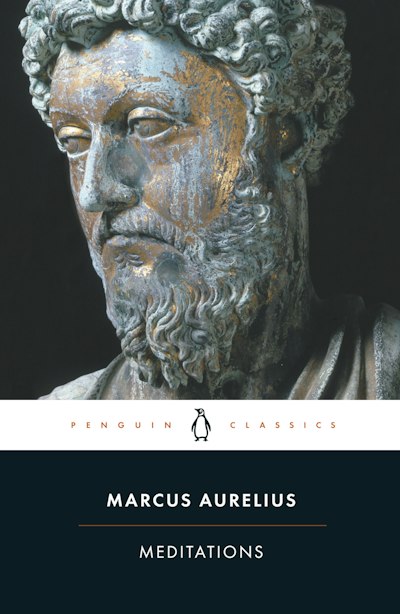
2. Meditations by Marcus Aurelius — the daily stoic read. The private notebook of a Roman emperor, reminding himself what he could control and what he could not. It is for you if you want a two-minute morning read that steadies the day before it starts. Its job: keep the line between your business and everyone else's visible, one passage at a time. Check current price.
3. Meditation Cushion (Zafu) — a dedicated spot for the practice. A round floor cushion that gives your morning write and your pause a fixed place at home. It is for you if the practice keeps sliding off your schedule because it has nowhere to live. Its job: one spot, same time each day — the write becomes a habit, not a reminder you keep snoozing. Check current price.

4. Kindle Paperwhite (16GB) — carry the reading habit anywhere. The waterproof e-reader with a glare-free screen and weeks of battery life. It is for you if your reading habit dies the moment you leave the house. Its job: keep your gratitude books with you — on the plane, in the waiting room, in the quiet minutes before family arrives. Check current price.

5. The Body Keeps the Score by Bessel van der Kolk — understanding stress and low mood. The widely read book on how stress shows up physically — the tight chest, the clenched jaw, the exhaustion sleep does not fix. It is for you if your body says something is off before your mind can name it. Its job: help you understand what you are carrying, so the practice works with your real life, not around it. Check current price.

6. Atomic Habits by James Clear — keeping small practices daily. The bestselling guide to building habits through tiny, repeatable steps. It is for you if you start strong and fade by week two. Its job: the system for keeping a five-minute practice daily — never skip twice, make it obvious, make it easy. Check current price.
The Bottom Line
Gratitude is not a feeling you wait for once a year. It is a practice you build in five minutes a morning — a write, a thank-you, a weekly review. Fifteen days from now, Thanksgiving arrives either way. Start today, and the gratitude at the table will not be a performance. It will be a report.
Three lines in the morning. One thank-you before bed. Ten minutes on Sunday to look back. That is the whole practice — and it is enough.