You Don't Owe Anyone a Perfect Holiday.
The holidays come with an unspoken assignment: host perfectly, gift perfectly, show up everywhere smiling. You don't owe anyone that performance — here's how to choose the few things that matter and let the rest go.


This post contains affiliate links. If you purchase through our links, we may earn a commission at no extra cost to you. We only recommend products we've researched and would use ourselves.
The Holiday Performance Trap
Every December arrives with an unspoken assignment: host perfectly, gift perfectly, show up everywhere smiling, and make it all look effortless. The assignment never comes as one big demand. It comes as dozens of small ones — the extra party, the third cookie exchange, the gift list that keeps growing, the family photo that has to look like a magazine spread. Each one sounds reasonable on its own. Together, they add up to a season spent performing instead of living.
The pressure works because it hides inside good intentions. Nobody asks you to be miserable. They ask you to make one more dish, attend one more gathering, buy one more present. Saying yes to each feels generous. Saying yes to all of them leaves you exhausted, resentful, and counting the days until January — which is a strange way to spend the warmest month of the year.
Here is the reframe that changes everything: the holidays are not a performance review. Nobody hands out grades for the table setting or the gift wrap. The people who love you will remember how the season felt, not how it photographed. And the feeling you actually want — warmth, rest, connection — does not come from doing more. It comes from choosing less, on purpose.
That is the whole argument of this piece. Pick one or two things that genuinely matter to you. Say no to the rest, kindly and early. Then protect a little quiet time every day so the season belongs to you, not to the calendar. The rest of this guide shows you exactly how.
The Three-Question Filter
Every holiday obligation deserves a filter before it earns a yes. Run each invitation, tradition, and expectation through three questions — and be honest with the answers.
- Does this matter to you, or only to the idea of a perfect holiday? There is a real difference between a tradition you love and a tradition you perform because skipping it feels like failure. The first one feeds you. The second one drains you.
- Will you remember this in February — or only the stress of it? Most holiday obligations fail this test. The elaborate dessert nobody asked for, the party you attend out of guilt, the gift bought at midnight in a panic: none of these survive February. The quiet evening with the people you love most does.
- What does saying yes actually cost? Not just money — time, energy, sleep, and the quiet hours you will never get back. A yes to one thing is always a no to something else. Make sure the trade is worth it.
The rule is simple: if an obligation fails two of the three questions, it is a no. If it passes, it earns a real yes — the kind you give gladly, without resentment trailing behind it.
| The Obligation | Ask the Filter | The Honest Answer |
|---|---|---|
| A third holiday party in one week | Does it matter to you, or to the perfect-holiday idea? | Usually the idea. Send warm wishes and skip it. |
| Baking from scratch for the whole neighborhood | Will you remember it in February? | You will remember the exhaustion. Buy the good bakery box instead. |
| One quiet dinner with your closest people | What does the yes cost — and what does it give? | It gives the whole season its meaning. Say yes, gladly. |
| A gift for someone you barely know | Does this matter to you? | A kind card beats a panicked purchase every time. |
Run the filter once, decide once, and stop re-litigating. The filter works best when you use it early — before the invitations pile up and every no starts to feel like a betrayal. A decision made in November is a gift to your December self.
How to Say No Without the Guilt Spiral
The hardest part of a simpler holiday is not the deciding. It is the telling. Most of us can spot the obligations we should drop; we just cannot find the words to drop them without feeling like the villain. So here are scripts that work — kind, clear, and short enough to send as a text.
- For the extra party: "Thank you so much for thinking of us. We are keeping this year small, so we will have to miss it — we hope it is wonderful."
- For the family expectation: "We love this tradition, and this year we need a quieter version. Can we do a call the week after instead, just the two of us?"
- For the gift pressure: "We are doing simple gifts this year — a card and a good conversation. No big presents, and we mean that for us too."
- For the last-minute ask: "That sounds lovely, and our calendar is genuinely full. Thank you for understanding."
Notice what these scripts do not contain: no elaborate excuse, no fake conflict, no long apology. A kind no does not need a defense attorney. The more you explain, the more room you give someone to negotiate — and the more you start negotiating with yourself.
Three rules keep the no standing after you send it. First, decide once. Reopening the decision every time you feel a twinge of guilt is how the no becomes a yes at the last minute. Second, do not ask permission to rest. "Is it okay if we skip this year?" hands your boundary to someone else for approval. Third, expect the guilt — and name it for what it is. Guilt after a kind no is usually habit, not evidence. You have said yes for years; of course the first no feels strange. Strange is not the same as wrong.
And remember: the people who truly want you there will still want you there next year. A boundary set with warmth is not a door slamming. It is a door left open, on your terms.
Protect One Quiet Hour a Day
Here is the part nobody puts on the holiday checklist: one quiet hour a day, just for you. Not an hour stolen between errands. A real hour — or even twenty unhurried minutes — where nothing is being performed, produced, or purchased. This is the practice that makes the whole simpler-holiday idea hold together, because without it, the freed-up time just fills with new obligations.
Start the morning before the house wakes. Three lines in a journal: one thing you are grateful for, one thing you are looking forward to, one thing you are letting go of today. That is it. The Five Minute Journal gives you exactly this structure — three morning prompts and three evening prompts — so the practice starts the moment you open it instead of staring at a blank page. Check current price.
Then read something that has nothing to do with the season. A few pages of Meditations by Marcus Aurelius does more for a crowded December mind than any productivity trick: a Roman emperor reminding himself, two thousand years ago, that most of what worries us is not worth the worry. Check current price. Or take the Kindle Paperwhite (16GB) to the quiet corner of the house and read until the noise feels far away. Check current price.
The practice does not have to look impressive. It has to be yours. A short walk without headphones. Ten minutes sitting with tea before the day starts. One page, one breath, one quiet moment that nobody else gets a vote on. Protecting that hour is not selfish — it is the thing that makes you pleasant to be around for the other twenty-three.
The science of habits backs this up, and Atomic Habits by James Clear makes the case better than any pep talk: tiny steps, repeated daily, beat grand gestures every time. A five-minute morning practice you actually do will carry you further than a perfect holiday plan you abandon by the second week. Check current price.
Our Top Picks
The tools below are not holiday decorations. They are the quiet infrastructure of a calmer season — daily reflection, real reading, and a place to sit still. Each one earns its place by making the simpler holiday easier to actually live.
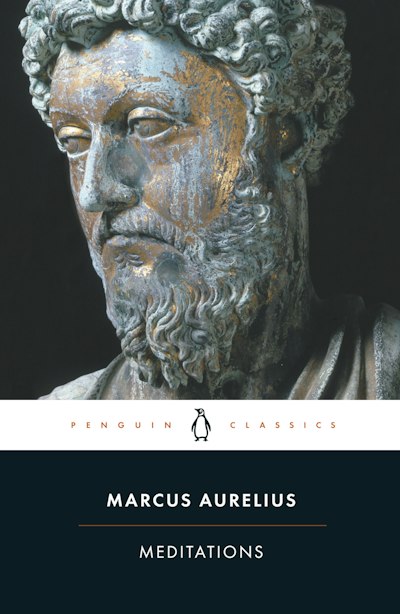
Meditations by Marcus Aurelius — for the reader who wants two thousand years of perspective in a few pages a morning. Its job: shrink the holiday noise down to its true size with stoic reminders that most of what worries us is not worth the worry. Check current price.

Five Minute Journal — for the person who wants a daily practice with no blank-page dread. Its job: three morning prompts and three evening prompts, five minutes total, so reflection starts the moment you open it. Check current price.

Kindle Paperwhite (16GB) — for the reader who wants a quiet escape that fits in a coat pocket. Its job: carry a whole library into the crowded house, with a glare-free screen that reads like paper in any light. Check current price.
Meditation Cushion (Zafu) — for the person building a real sit-down practice instead of meditating "someday." Its job: a dedicated seat that lifts your hips, straightens your spine, and makes the habit physical — you sit down, and your body knows what time it is. Check current price.
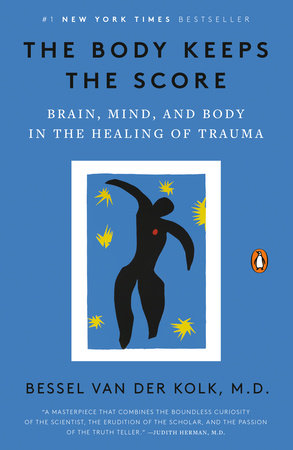
The Body Keeps the Score — for the person who notices the holidays live in the body as much as the mind: the tight shoulders, the shallow breathing, the tension that shows up before the first guest arrives. Its job: explain why the season feels the way it does, and what actually helps. Check current price.

Atomic Habits by James Clear — for the person who wants the small daily practice to survive past January. Its job: the system for keeping tiny habits alive — never miss twice, make it easy, make it obvious. Check current price.
| Product | Best For | Why It Earns Its Place |
|---|---|---|
| Meditations by Marcus Aurelius | Morning perspective | Two thousand years of stoic calm in a few pages a day |
| Five Minute Journal | A daily practice with structure | Three prompts, five minutes, no blank-page dread |
| Kindle Paperwhite (16GB) | Quiet reading anywhere | A whole library in your pocket for crowded-house escapes |
| Meditation Cushion (Zafu) | A real sit-down practice | A dedicated seat that makes stillness a physical habit |
| The Body Keeps the Score | Understanding holiday tension | Explains why the season lives in the body, not just the mind |
| Atomic Habits by James Clear | Keeping the practice past January | The system that turns five quiet minutes into a lasting habit |
The Bottom Line
You do not owe anyone a perfect holiday. You owe the people you love your presence — rested, honest, and actually there — and you owe yourself a season you can remember fondly instead of recovering from. Choose one or two things that matter. Say no to the rest, kindly and early. Protect one quiet hour a day. That is the whole plan, and it is enough.
Start tonight: run your calendar through the three-question filter, send one kind no, and set out the journal for the morning. The perfect holiday was never the goal. A real one was. Follow @upgrade.daily.drops for one calm, practical upgrade every day — and read the full guide at upgrade411.com.