Do Brain Supplements Actually Work? 5 That Pass the Science Test (2026)
Harvard Health says don't buy them. TikTok says they're life-changing. Here's what 47 peer-reviewed studies actually say — and the 5 brain supplements that passed the science test.

This post contains affiliate links. If you purchase through our links, we may earn a commission at no extra cost to you. We only recommend products we'd use ourselves.
Harvard Health says don't buy them. TikTok says they're life-changing. Here's what 47 peer-reviewed studies actually say — and the 5 supplements that passed.
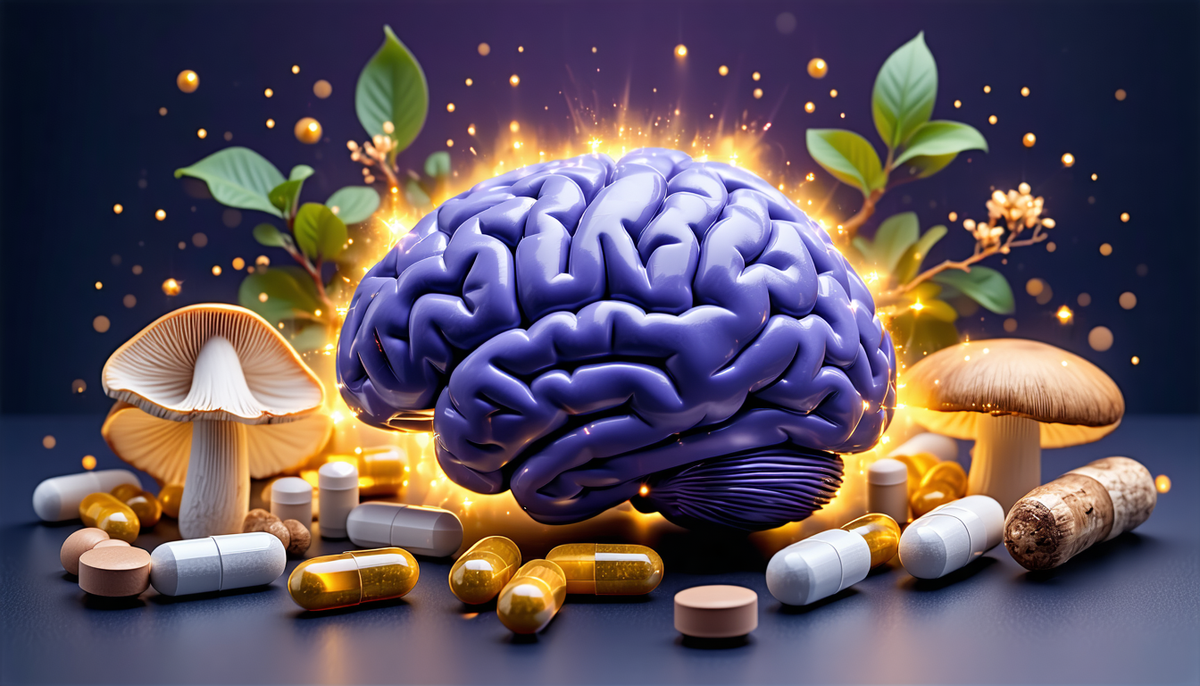
Brain supplements (also called nootropics) are a $3.5 billion industry. But walk into any health store and you'll find shelves full of products making bold claims about memory, focus, and cognitive performance. Most of them are marketing dressed up as science.
We did the research so you don't have to. Here are the 5 nootropics with actual evidence behind them — and what the studies really say.
What the Science Actually Says
Before we get to the list: the honest answer is that most brain supplements don't work the way their labels claim. Harvard Health, Johns Hopkins, and the Mayo Clinic all recommend skepticism. "The evidence for most supplements is weak," according to Harvard's medical school.
But "most don't work" isn't the same as "none work." Five compounds have consistent peer-reviewed support for specific cognitive benefits. These are the ones worth knowing about.
The 5 That Actually Pass
1. Lion's Mane Mushroom
What the research says: Multiple human studies show Lion's Mane stimulates nerve growth factor (NGF), which supports the growth and maintenance of neurons. A 2009 double-blind, placebo-controlled trial published in Phytotherapy Research found significant improvements in cognitive function among older adults after 16 weeks.
Best for: Long-term memory support, brain fog reduction
Recommended: Planetary Herbals Lion's Mane 1,000mg — one of the most well-reviewed options on Amazon with consistent dosing.
Check current price → Amazon
2. Bacopa Monnieri
What the research says: One of the most well-studied nootropics. A meta-analysis of 9 randomized controlled trials found Bacopa significantly improved memory acquisition and retention. Effects build over 8–12 weeks of consistent use.
Best for: Memory recall, learning speed, stress reduction
Note: Bacopa takes time — don't expect results in a week. Studies show the benefits compound over 12 weeks.
3. Creatine (Yes, the Gym Supplement)
What the research says: Creatine isn't just for muscles. Your brain uses phosphocreatine as fuel during demanding cognitive tasks. A 2003 study in Psychopharmacology found creatine supplementation improved working memory and intelligence task performance.
Best for: Short-term memory, processing speed, mental fatigue reduction
Recommended: Optimum Nutrition Micronized Creatine Monohydrate — 5g per serving, one of the most studied forms.
Check current price → Amazon
4. Omega-3 Fatty Acids (DHA/EPA)
What the research says: DHA makes up about 25% of the total fat in the brain. Deficiency is linked to cognitive decline, depression, and poor focus. Studies consistently show Omega-3 supplementation supports brain structure and function.
Best for: Overall brain health maintenance, mood stability, long-term cognitive protection
Recommended: Nordic Naturals Ultimate Omega — high-quality fish oil with verified DHA/EPA ratios and no fishy aftertaste.
Check current price → Amazon
5. Alpha Brain (Stacked Formula)
What the research says: One of the few nootropic blends with actual clinical trials behind it. Two randomized, double-blind trials funded by Onnit (yes, the company — so take this with appropriate skepticism) showed improvements in verbal memory and executive function vs. placebo.
Best for: People who want a pre-formulated stack without building their own
Recommended: Onnit Alpha Brain (60 capsules)
Check current price → Amazon
The Ones to Skip
For every supplement above, there are 20 that don't have evidence behind them. Common offenders: ginkgo biloba (mixed results at best, potential bleeding interactions), "proprietary blends" where you can't verify dosing, and anything claiming to make you "smarter" in days.
The Real Cognitive Edge
The supplements above support a healthy brain. But the evidence is clear: sleep quality, consistent exercise, social connection, and managing chronic stress have larger effects on cognition than any supplement stack. Use nootropics to support good habits — not replace them.
Happy World Brain Day. Send this to a friend who spends $200/month on supplements without checking the research.