How to Build Wealth Without a 6-Figure Job


This post contains affiliate links. If you purchase through these links, we may earn a small commission at no extra cost to you.
There's a dangerous myth floating around personal finance: that building wealth requires a massive income. That you need to be a tech executive, a surgeon, or a trust fund kid to ever achieve financial freedom.
This is objectively wrong.
The data tells a different story. The majority of millionaires in America didn't inherit their wealth and don't earn six-figure salaries. They're teachers, nurses, small business owners, and skilled tradespeople who mastered a small set of financial principles — and applied them consistently over time.
This guide is your roadmap. Not get-rich-quick schemes. Not crypto gambling. Just the proven, boring-but-effective strategies that actually build wealth over decades — regardless of your current income.
The Wealth Equation Most People Get Wrong
Most people think the wealth equation is: Wealth = High Income
The actual equation is: Wealth = (Income - Expenses) × Time × Returns
This changes everything. Here's why:
- A doctor earning $300K who spends $290K builds less wealth than a teacher earning $55K who invests $15K per year
- Someone who starts investing $500/month at 25 ends up with MORE than someone who starts investing $1,000/month at 35 (thanks to compound interest)
- Your savings rate — the gap between what you earn and what you spend — matters far more than your gross income
This isn't motivational fluff. It's math. And math doesn't care about your job title.
Strategy 1: The Gap — Maximizing Your Savings Rate
Your savings rate is the engine of wealth building. It's the percentage of your take-home pay that you don't spend. And here's the powerful part: every 1% increase in your savings rate accelerates your timeline to financial freedom.
Where the Money Actually Goes
Before you can increase your savings rate, you need to know where your money is currently going. Most people are shocked when they actually track this.
The 50/30/20 Baseline:
- 50% to needs (housing, food, transportation, insurance, minimum debt payments)
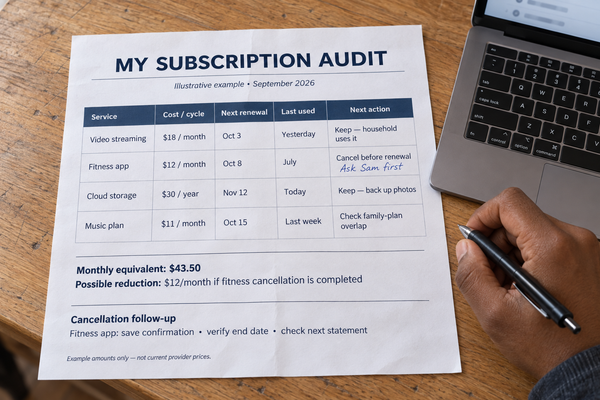
- 30% to wants (entertainment, dining out, hobbies, subscriptions)
- 20% to savings and debt payoff
If you're currently saving less than 20%, getting to this baseline is your first milestone. If you're already there, push toward 30-40% — that's where the wealth acceleration really kicks in.
The Three Levers for Increasing Your Gap
Lever 1: Cut the Big Three
Forget skipping lattes. The three biggest expenses for most people are housing, transportation, and food. Small optimizations here dwarf any amount of coupon-clipping:
- Housing: Can you get a roommate? Move to a less expensive area? Negotiate rent at renewal? Refinance your mortgage?
- Transportation: Can you go from two cars to one? Buy used instead of new? Bike or take transit part-time?
- Food: Meal planning alone can cut food costs by 30-40%. Batch cooking on Sundays saves both money and time.
Lever 2: Eliminate Lifestyle Inflation
This is the wealth killer that nobody talks about. You get a raise, and within months your expenses have risen to match. The solution: every time your income increases, save at least 50% of the increase. You can still lifestyle-inflate a little — but bank the majority before you adjust to having it.
Lever 3: Increase Income (Strategically)
While spending cuts have a floor (you can't spend less than zero), income has no ceiling. But the key word is "strategically":
- Negotiate your salary (most people never do this — one conversation can be worth $5-10K per year)
- Develop a high-value skill that commands premium pay
- Start a side income stream that doesn't trade more hours for money
- Job-hop strategically every 2-3 years (average 10-20% salary bump vs. 3% annual raise)
Try this today: Pull up your bank and credit card statements from last month. Categorize every expense. Identify one recurring cost you could eliminate or reduce without meaningfully affecting your happiness.
Strategy 2: Invest Consistently (Not Cleverly)
Here's a truth that will save you decades of stress: you don't need to be a good investor to build wealth. You just need to be a consistent one.
The Power of Boring Investing
The best investment strategy for 95% of people is embarrassingly simple:
- Set up automatic transfers from your checking to your investment account
- Buy a low-cost, diversified index fund every month regardless of market conditions
- Never sell until you need the money in retirement
- Ignore the news, ignore market timing, ignore "hot tips"
That's it. This strategy — called dollar-cost averaging into index funds — has outperformed 90% of professional fund managers over 20-year periods. Not because it's clever, but because it eliminates the emotional decisions that destroy returns.
Where to Put Your Money (In Order)
Follow this priority list:
1. Emergency Fund (3-6 months of expenses)
Before investing anything, build a cash buffer. This prevents you from going into debt during emergencies AND gives you the psychological safety to invest without panic-selling during downturns.
2. Employer 401(k) Match
If your employer matches 401(k) contributions, invest at least enough to get the full match. This is a 50-100% instant return on your money — you won't find that anywhere else.
3. Roth IRA ($7,000/year limit in 2024)
Tax-free growth for decades. If you qualify, max this out. Your future self will thank you profusely.
4. HSA (if eligible — $4,150 individual, $8,300 family)
The only triple-tax-advantaged account in existence: tax-deductible contributions, tax-free growth, tax-free withdrawals for medical expenses. After 65, it functions like a second IRA.
5. Back to 401(k) (up to $23,000 limit)
Max out the remaining space in your employer plan.
6. Taxable Brokerage Account
Once tax-advantaged space is full, invest in a regular brokerage account. Same index fund strategy — just with less tax protection.
What to Actually Buy
For most people, a simple three-fund portfolio covers everything you need:
- Total US Stock Market Index Fund (60-80% of portfolio)
- International Stock Market Index Fund (10-20%)
- Total Bond Market Index Fund (10-20%, more as you approach retirement)
Total expense ratio: under 0.10% per year. Compare that to the 1-2% that actively managed funds charge — over 30 years, that fee difference costs you hundreds of thousands of dollars.
Try this today: If you don't have a brokerage account, open one. Vanguard, Fidelity, and Schwab all offer free accounts with no minimums. Even if you only start with $50/month, start today. The best time to plant a tree was 20 years ago. The second-best time is now.
Understanding the psychology behind money decisions is just as important as the mechanics. The Psychology of Money by Morgan Housel ($15) is the best book we've found on why smart people make dumb financial decisions — and how to avoid the traps. It's a quick read that permanently changes how you think about wealth.
Strategy 3: Build Systems That Run Without Willpower
Here's why most financial plans fail: they rely on willpower. And willpower is a depleting resource. Every month, you have to remember to transfer money, resist the impulse purchase, choose the cheaper option.
The solution: automate everything so your wealth builds on autopilot.
The Automation Stack
Layer 1: Automatic Savings
Set up automatic transfers from checking to savings/investments on the day you get paid. Not after bills. Not at the end of the month. First. Pay yourself first, then live on what remains. This is the single most important automation you'll ever set up. (We go deeper on this in our dedicated guide: Why You Need to Automate Your Savings.)
Layer 2: Automatic Bill Pay
Every recurring bill should be on autopay. This eliminates late fees (which are pure waste) and removes decision fatigue around bills.
Layer 3: Automatic Investment
Set your brokerage account to automatically invest your contributions into your chosen funds. No manual buying needed. No temptation to time the market.
Layer 4: Automatic Increases
Many 401(k) plans allow you to set automatic annual contribution increases (e.g., increase by 1% each year). Enable this. You won't notice the difference in your paycheck, but it compounds dramatically over time.
The "Invisible Money" Principle
Money you never see is money you never spend. When your savings and investments are automatically deducted before you even see your paycheck, you naturally adjust your lifestyle to what's left. This is infinitely easier than earning, seeing the full amount, and then trying to voluntarily move money away from yourself.
For a comprehensive system that ties all of this together — automation, accounts, and the psychology of spending — I Will Teach You to Be Rich by Ramit Sethi ($15) is the best practical playbook we've found. It's specifically written for people who want a system they set up once and never think about again.
Strategy 4: Avoid the Wealth Destroyers
Building wealth is a two-part game: growing your money AND protecting it from the forces that erode it.
The Big Wealth Destroyers
1. High-Interest Debt
Credit card debt at 20-25% interest is the exact opposite of compound interest — it's compound destruction. Before investing heavily, eliminate any debt above 7% interest. Below 7% (like a mortgage), the math usually favors investing over extra payments.
2. Lifestyle Inflation
We covered this above, but it bears repeating: the single biggest reason high earners aren't wealthy is that their spending rises to match (or exceed) their income. Lifestyle inflation is silent, gradual, and devastating.
3. Investment Fees
A 1% annual fee on a $100,000 portfolio costs you over $200,000 in lost growth over 30 years. Always check expense ratios. Anything over 0.20% needs serious justification.
4. Emotional Investing
Panic-selling during crashes and euphoria-buying during peaks is the most common way normal people destroy their returns. The solution: automate your investing so emotions never enter the equation.
5. Divorce Without a Plan
Statistically, divorce is one of the biggest wealth-destroying events. This isn't relationship advice — it's a financial reality to be aware of. Communicate about money early and often.
The Wealth Timeline: What to Expect
Building wealth without a high income takes time. Here's a realistic timeline:
Year 1-3: The Foundation
- Emergency fund built ✓
- High-interest debt eliminated ✓
- Automation systems running ✓
- Savings rate at 20%+ ✓
- Net worth growth feels slow (this is normal)
Year 3-7: The Momentum Phase
- Compound interest starts becoming noticeable
- Investment returns begin contributing meaningfully
- Income growth + maintained expenses = accelerating gap
- Net worth crosses meaningful milestones ($50K, $100K)
Year 7-15: The Acceleration Phase
- Your money is now making more money than you can save
- Compound interest is doing the heavy lifting
- Net worth growth feels exponential (because it is)
- Financial options expand dramatically
Year 15+: The Freedom Phase
- Work becomes optional, not mandatory
- Investment income could cover basic expenses
- Decisions are driven by preference, not financial pressure
The hardest years are 1-3 because progress feels invisible. Trust the math. It works. Every wealthy person went through the same slow early phase.
Real Numbers: What Consistent Investing Looks Like
Let's put actual numbers to this. Assuming 8% average annual returns (the historical stock market average after inflation):
Investing $300/month ($3,600/year):
- After 10 years: ~$56,000
- After 20 years: ~$178,000
- After 30 years: ~$453,000
Investing $500/month ($6,000/year):
- After 10 years: ~$93,000
- After 20 years: ~$296,000
- After 30 years: ~$755,000
Investing $750/month ($9,000/year):
- After 10 years: ~$140,000
- After 20 years: ~$445,000
- After 30 years: ~$1,132,000
Notice: $750/month is $9,000/year. You don't need six figures to invest $9,000 per year. A household income of $60,000 with a 15% savings rate gets you there. This is how normal people become millionaires.
For a deeper understanding of how compound interest creates this exponential growth, see our companion piece on How Compound Interest Actually Works.
Your Wealth-Building Action Plan
Today:
- Calculate your current savings rate (total savings / take-home pay × 100)
- Identify one expense to cut or reduce this month
This Week:
- Open an investment account if you don't have one
- Set up one automatic transfer (even $25/week to start)
This Month:
- Automate all recurring bills
- Review your 401(k) contribution and increase by at least 1%
- Set a "savings rate target" for the year
This Quarter:
- Build your full automation stack
- Create a plan to eliminate any high-interest debt
- Set a 12-month net worth goal
The Bottom Line
Wealth building isn't about income. It's about the gap between what you earn and what you spend, invested consistently over time. The math is simple. The execution requires patience, automation, and the discipline to ignore the noise.
You don't need a six-figure salary. You need a system. Start today, automate tomorrow, and let compound interest do what it does best — turn small, consistent actions into extraordinary results.
Your future self will look back on this moment as the turning point. Make it count.