Gut-Brain Axis Supplements: 5 Psychobiotics With Clinical Evidence (+ Where to Buy)
Your gut isn't just digesting food. It's manufacturing roughly 90% of your body's serotonin and communicating with your brain through the vagus nerve. Here are 5 psychobiotics with clinical evidence behind them.

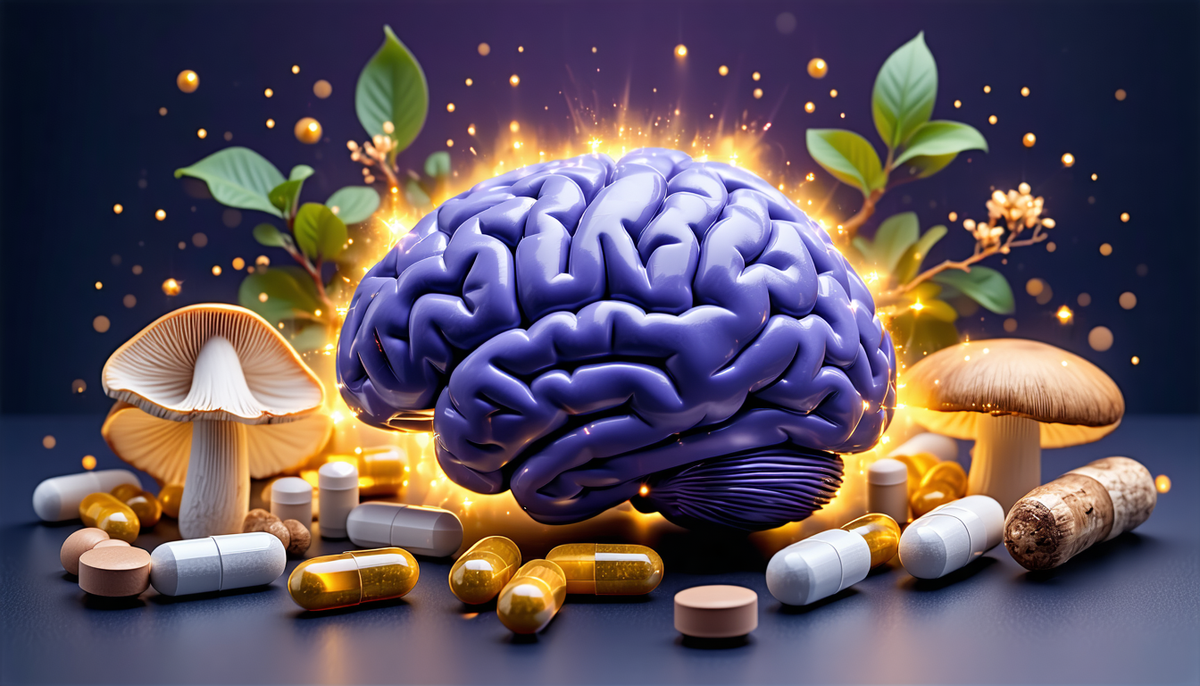
Your gut isn't just digesting food. It's manufacturing roughly 90% of your body's serotonin, housing 70% of your immune system, and communicating with your brain through a dedicated neural highway called the vagus nerve. The gut-brain axis isn't fringe science anymore — it's one of the fastest-growing areas of research in neuroscience and psychiatry.
And a specific category of probiotics — called psychobiotics — has clinical evidence behind them for mental health benefits, not just digestive ones.
This post contains affiliate links. If you purchase through our links, we may earn a commission at no extra cost to you. We only recommend products we've researched and would use ourselves.
What Makes a Probiotic a "Psychobiotic"?
The term was coined by researchers at APC Microbiome Ireland in 2013 and has since become standard in the field. A psychobiotic is a live organism that, when ingested in adequate amounts, produces a mental health benefit through the gut-brain axis. The mechanism: certain bacterial strains produce neurotransmitters (including GABA and serotonin precursors) and modulate the vagus nerve directly.
Not every probiotic is a psychobiotic. The strain specificity matters enormously — the benefits of Lactobacillus rhamnosus don't transfer to other Lactobacillus species. This is why "probiotics for mood" is a category that requires scrutiny.
5 Strains and Products With Clinical Evidence
1. Lactobacillus helveticus R0052 + Bifidobacterium longum R0175
Evidence: The most studied psychobiotic combination. Two RCTs show significant reductions in psychological distress, cortisol, and anxiety over 30 days vs. placebo. This is the combination that put psychobiotics on the clinical map.
Recommended: Garden of Life Dr. Formulated Probiotics Mood+ — contains both R0052 and R0175 at studied doses, plus ashwagandha for additional cortisol support.
Check current price → Amazon
2. Lactobacillus acidophilus NCFM
Evidence: Associated with reduced visceral pain sensitivity and improved gut-barrier function. The gut-brain axis works in both directions — when gut discomfort is reduced, psychological distress often follows. NCFM is the strain in most Culturelle products.
Recommended: Culturelle Pro Strength Daily Probiotic — one of the most clinically validated probiotic products available, NCFM strain confirmed.
Check current price → Amazon
3. Bifidobacterium longum 1714
Evidence: APC Microbiome study (2019) demonstrated reductions in cortisol and mild anxiety symptoms in healthy volunteers over 4 weeks. Strain 1714 specifically — not generalizable to other B. longum.
Note: This strain is harder to find as a standalone supplement in the US. It's in development in some European formulations. Look for it specifically when evaluating mood probiotic products.
4. Multi-strain psychobiotic blends with Omega-3 cofactors
Evidence: Emerging research shows omega-3 fatty acids (particularly DHA) enhance probiotic efficacy by improving gut barrier function. Taking probiotics with DHA may amplify the psychobiotic effect.
Recommended stack: Any evidence-backed probiotic (like Garden of Life Mood+) + Nordic Naturals Ultimate Omega
Check current price → Amazon
5. Prebiotics: feeding the bacteria you already have
Evidence: A 2022 review in Neuroscience & Biobehavioral Reviews found that prebiotic supplementation reduced cortisol awakening response and improved attention bias away from negative stimuli — effects consistent with reduced anxiety. Prebiotics feed existing gut bacteria, including psychobiotics.
Recommended: Most probiotic formulations now include prebiotics. Look for inulin, FOS, or chicory root in the ingredient list as indicators of prebiotic inclusion.
What the Research Doesn't Claim
Psychobiotics show the most promise for subclinical anxiety and stress — they're not a replacement for therapy or medication for clinical depression or anxiety disorders. The effect sizes in RCTs are real but modest. Think of them as a supplement to a healthy gut environment, not a standalone mental health intervention.
The gut-brain axis is also bidirectional: stress disrupts the gut microbiome, which then affects mood — which creates more stress. Psychobiotics are most effective as part of an overall approach that includes sleep, exercise, and stress management.
How to Start
- Choose a product with named strains matching clinical evidence (R0052 + R0175 is the highest-evidence combination)
- Take consistently for at least 4 weeks — the microbiome changes aren't immediate
- Track subjective mood, sleep quality, and stress reactivity — not just gut symptoms
- Add omega-3s as a cofactor if budget allows
Send this to someone who asked "do probiotics actually work?" and deserves an actual answer.