Hydration Hacks: What Most People Miss (and 5 Fixes That Actually Work)

You drink water. Maybe even a lot of it. But you still feel tired by 2 PM, your skin looks dull, and your workouts feel like you're moving through concrete.
Here's the uncomfortable truth: most chronic, low-grade dehydration has nothing to do with how much water you drink. It's about what's in the water — and what's missing from your hydration strategy entirely.
On International Self-Care Day, let's fix the one self-care fundamental most people get wrong. Because proper hydration isn't glamorous, but it's the foundation everything else sits on.
This post contains affiliate links. If you purchase through our links, we may earn a commission at no extra cost to you. We only recommend products we've researched and would use ourselves.
Why "Drink 8 Glasses of Water" Is Incomplete Advice
The 8-glasses rule originated from a 1945 Food and Nutrition Board recommendation that was never based on clinical research. It's not wrong exactly — it's just incomplete.
What matters more than volume:
- Electrolyte balance — Water without electrolytes passes through you without being absorbed by cells
- Timing — Front-loading hydration in the morning outperforms sipping all day
- Mineral content — Tap water in most cities has been stripped of the minerals that aid absorption
- Co-factors — Sodium, potassium, and magnesium work together to pull water into cells
You can drink a gallon of plain water and still be functionally dehydrated at the cellular level. That's why the "just drink more water" crowd still feels like garbage.
Hack #1: The Morning Electrolyte Protocol
You wake up 6-8 hours dehydrated. Your cortisol peaks within 30 minutes of waking. This is the highest-leverage hydration window of your entire day.
The protocol:
- 16-20 oz of water within 10 minutes of waking
- Add electrolytes — specifically sodium (800-1000mg), potassium (200mg), and magnesium (60mg)
- Wait 20-30 minutes before coffee (caffeine is a mild diuretic — hydrate first)
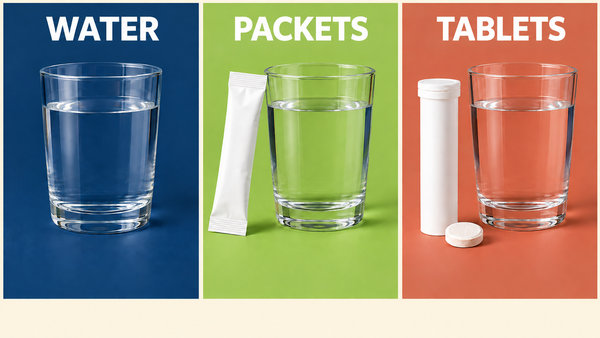
LMNT Electrolyte Packets hit these ratios precisely — 1000mg sodium, 200mg potassium, 60mg magnesium, zero sugar. One packet in your morning water eliminates the guesswork. The science-backed ratio means your cells actually absorb what you drink instead of flushing it straight through.
Hack #2: The "Pinch Test" Isn't Enough — Track These 4 Signals
Forget the skin pinch test. Here are the real-time hydration indicators researchers use:
- Urine color: Pale straw = hydrated. Clear = over-hydrated (flushing electrolytes). Dark = behind.
- Energy cliff: If you crash between 2-4 PM despite sleeping well, it's likely a hydration issue, not a sleep issue.
- Workout performance: A 2% drop in body water reduces endurance by up to 25% (University of Connecticut research).
- Morning headache: If you wake with a mild headache that resolves after drinking, you're consistently under-hydrating before bed.
Track these for one week. You'll be shocked at the pattern.
Hack #3: The Portable Electrolyte Strategy
Home hydration is easy. The problem is everywhere else — the office, the gym, travel. This is where most hydration habits break down.
Nuun Sport Electrolyte Tablets solve the portability problem. Drop one tablet in any water bottle — it dissolves in 60 seconds, adds key electrolytes (sodium, potassium, calcium, magnesium), and has only 1g of sugar. The tube fits in a pocket, gym bag, or travel kit.
When to use:
- During workouts longer than 30 minutes
- During flights (cabin pressure dehydrates you faster)
- Any day above 80°F
- After alcohol consumption (the next morning)
Hack #4: The Food-Water Connection
Here's the most overlooked hydration hack: 20-30% of your daily water should come from food.
High-water foods that also deliver minerals:
- Cucumber (96% water + silica for skin)
- Watermelon (92% water + lycopene + potassium)
- Celery (95% water + sodium + potassium)
- Bell peppers (92% water + vitamin C)
- Zucchini (94% water + magnesium)
Adding 2-3 servings of these foods daily is equivalent to an extra glass of mineral-rich water — except you also get fiber, vitamins, and phytonutrients that plain water will never deliver.
Hack #5: The Pre-Sleep Hydration Window
Most people stop drinking water 2-3 hours before bed to avoid bathroom trips. Smart move. But there's a sweet spot that prevents overnight dehydration without disrupting sleep.
The strategy:
- Have your last large drink 2-3 hours before bed
- Take a small dose of magnesium 30-60 minutes before sleep (magnesium improves sleep AND aids overnight cellular hydration)
- Keep 8 oz of room-temperature water bedside for middle-of-night sips
This prevents the "wake up dehydrated" cycle without sacrificing sleep quality. Magnesium does double duty: it relaxes muscles for better sleep AND helps cells retain water overnight.
The Hydration Stack (Putting It All Together)
Here's the complete daily protocol:
- Morning (first 30 min): 16-20 oz water + full electrolyte packet
- Mid-morning: 8-12 oz water + high-water snack (cucumber, melon)
- Lunch: 8-12 oz water + water-rich foods on the plate
- Afternoon: 12-16 oz water + electrolyte tablet (especially if active or hot)
- Pre-dinner: 8-12 oz water
- Evening: Magnesium + final 8 oz (2-3 hours before bed)
Total: ~80-100 oz distributed across 6 intentional windows.
Notice this isn't about chugging a gallon randomly. It's about strategic timing + mineral support at every window. That's what separates "I drink a lot of water" from actually being hydrated.
Start Today: Pick One Hack
Don't overhaul your entire hydration strategy at once. Pick the one that addresses your biggest symptom:
- Afternoon energy crash → Morning electrolyte protocol
- Poor workout performance → Portable electrolyte tablets
- Waking up dehydrated → Pre-sleep magnesium window
- Generally sluggish → Add 2-3 high-water foods daily
Hydration isn't sexy self-care. But it's the foundation every other health habit sits on. Fix this, and everything else gets easier.