Stop Trying 5 Diets — Do This One Thing Instead


This post contains affiliate links. If you purchase through these links, we may earn a small commission at no extra cost to you.
Keto. Paleo. Intermittent fasting. Carnivore. Vegan. Whole30. Mediterranean. IIFYM. Atkins. South Beach.
You've tried some of these. Maybe all of them. And here's what happened: you lost some weight, felt deprived, eventually "fell off," gained it back (plus a few extra pounds for good measure), and concluded that you just don't have enough willpower.
You're wrong. Your willpower isn't the problem. The approach is the problem.
The diet industry is a $72 billion machine that profits from your failure. Think about it: if any of these diets actually worked permanently, the industry would collapse. The model depends on you cycling through programs, buying new books, and signing up for the next thing after the last thing inevitably stops working.
What if there was something simpler? One foundational change that makes everything else easier — not another diet to follow, but a principle that works regardless of what you eat?
There is. And it has nothing to do with eliminating food groups.
Why Diets Fail (The Real Reason)
Before we reveal the one thing, let's understand why conventional diets have a 95% failure rate. Yes — 95% of people who diet regain the weight within 2-5 years. That's not a user error rate. That's a system design failure.
The Three Mechanisms of Diet Failure
1. Metabolic Adaptation
When you dramatically cut calories, your body responds by lowering your metabolic rate. It burns fewer calories at rest, makes you move less unconsciously (fidgeting, walking speed, etc.), and increases hunger hormones. Your body is fighting you — it thinks there's a famine.
2. Decision Fatigue
Restrictive diets require constant decision-making: "Can I eat this? How many carbs is that? Is this allowed?" Every food decision depletes your cognitive resources. By evening, your willpower tank is empty — and the kitchen is right there.
3. The Deprivation-Binge Cycle
Restriction creates psychological deprivation. Deprivation creates obsessive food thoughts. Obsessive thoughts lead to "just one bite" which leads to "I already messed up so I might as well eat everything." This isn't weakness — it's a predictable neurological response to restriction.
The Common Thread
Notice what all three mechanisms share: they're triggered by extreme, unsustainable changes. The more radical the diet, the harder your body and mind push back. This is why the "just eat less" advice fails so spectacularly — it ignores the biological and psychological counter-forces.
The One Thing: Protein-First Eating
Here it is. The single change that resolves most nutritional problems without requiring you to follow a "diet," eliminate food groups, or count anything obsessively:
Eat 30 grams of protein at every meal. That's it.
Not "only eat protein." Not "eliminate carbs." Not "stop eating things you enjoy." Just make sure every single meal contains at least 30 grams of protein, and eat that protein FIRST — before everything else on the plate.
This one shift cascades into a dozen positive changes, most of which happen automatically without additional willpower.
Why 30 Grams? Why First?
30 grams is the threshold for muscle protein synthesis (MPS). Below this, your body can't efficiently build or maintain muscle tissue. Above this (at a single meal), you get diminishing returns. Three meals with 30g each gives you 90g daily — which is approximately 0.7g per pound of bodyweight for a 130lb person, and close to optimal for most people.
Eating protein first ensures you actually get it. If you fill up on bread, rice, or salad first, you might not finish the protein. Lead with the protein, and everything else becomes a complementary side rather than the main event.
The Cascade Effect: Why This One Change Does So Much
Here's what happens when you prioritize protein at every meal:
Effect 1: Automatic Appetite Regulation
Protein is the most satiating macronutrient — by a significant margin. Studies consistently show that high-protein meals reduce hunger for 3-5 hours afterward. When you eat 30g of protein at breakfast, you naturally eat less at lunch — without trying to restrict. Without willpower. Without counting calories.
Real-world result: Most people naturally reduce their daily calorie intake by 300-500 calories when they prioritize protein. That's a pound of fat loss per week — from satiety alone.
Effect 2: Stable Blood Sugar
Protein slows the absorption of carbohydrates, blunting the blood sugar spike that causes the crash-and-crave cycle. When you eat protein FIRST (before the rice, bread, or pasta), the spike is even further reduced.
Real-world result: No more 3 PM energy crashes. No more ravenous hunger 2 hours after eating. No more sugar cravings driving you to the vending machine.
Effect 3: Muscle Preservation (The Metabolic Protector)
Here's the dirty secret of most diets: a significant portion of the weight you lose is muscle, not fat. And muscle is what keeps your metabolism running. Lose muscle → metabolism drops → you gain fat more easily → you diet again → lose more muscle. It's a vicious downward spiral.
Adequate protein intake (combined with any form of resistance exercise) protects your muscle mass during weight loss. This means more of what you lose is actually fat, and your metabolism stays elevated.
Real-world result: You keep the weight off because your body isn't metabolically crashed. This is the primary reason protein-focused eating has better long-term success than calorie-focused dieting.
Effect 4: Reduced Food Noise
"Food noise" — the constant background chatter about food, cravings, what to eat next — is often a protein deficiency signal. Your brain knows it needs amino acids and will keep sending hunger signals until it gets them. If you're eating calorically adequate but protein-poor food, you'll feel hungry despite having enough calories.
Real-world result: Many people report that food obsession dramatically decreases within 1-2 weeks of adequate protein intake. Food stops dominating your thoughts.
How to Get 30 Grams of Protein Per Meal
This is simpler than you think. Here's what 30g looks like:
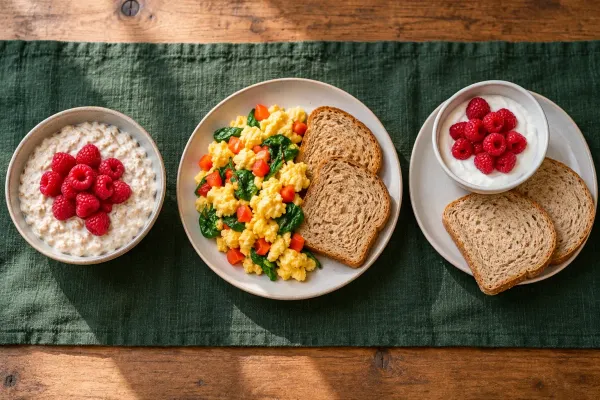
Breakfast Options (30g protein each)
- 3 eggs + 2 slices turkey bacon + Greek yogurt
- Protein smoothie (1 scoop whey + milk + banana + peanut butter)
- 1 cup Greek yogurt + 1 scoop protein powder + berries
- Cottage cheese (1.5 cups) + fruit + nuts
- 4-egg omelet with cheese and vegetables
Lunch Options (30g protein each)
- 6 oz chicken breast + any sides you want
- Large salad with 5 oz grilled salmon
- Turkey wrap (4 oz turkey + cheese + veggies in a tortilla)
- 1 can tuna + crackers + vegetables
- Burrito bowl with double chicken/steak
Dinner Options (30g protein each)
- 5-6 oz any meat/fish + vegetables + starch of choice
- Stir fry with 6 oz chicken or shrimp
- 2 cups lentil soup + Greek yogurt on the side
- Homemade burger (6 oz patty) with bun and toppings
- Pasta with meat sauce (use 5 oz ground turkey/beef in the sauce)
Quick Protein Additions (when a meal falls short)
- 1 string cheese = 7g
- 1 hard-boiled egg = 6g
- 1 Greek yogurt = 15-17g
- Beef jerky (1 oz) = 9g
- 1 scoop protein powder = 20-25g
- 1/2 cup cottage cheese = 14g
The "Protein Priority" Rule
When you sit down to eat, eat the protein on your plate first. Before the bread. Before the rice. Before the fries. Get the 30g in, and then eat whatever else you want until satisfied.
This isn't restriction — you're not eliminating anything. You're just reordering. Eat the chicken before the mashed potatoes. Have the eggs before the toast. Finish the salmon before the pasta.
Try this today: At your next meal, identify the protein source and eat it first. Notice how you feel 2-3 hours later compared to meals where you lead with carbs.
Tracking Without Obsessing
You don't need to weigh everything or log every calorie. The protein-first approach is designed to be approximate:
The Palm Method:
- 1 palm-sized portion of meat/fish = approximately 25-30g protein
- Use this as your visual guide at every meal
- If you're larger, use a slightly bigger portion; if smaller, slightly less
The Weekly Check:
Once a week, roughly estimate your daily protein. Are you hitting 90-120g most days? If yes, you're good. If not, where's the gap?
You don't need to be precise. You need to be consistent. "Pretty close to 30g at every meal, most days" beats "perfectly calculated macros for 3 weeks then complete burnout."
For a deeper understanding of how to build sustainable habits that actually stick (rather than relying on short-term motivation), Atomic Habits by James Clear ($16) is the gold standard. It explains exactly why small, identity-based changes like "I eat protein first" outperform dramatic overhauls every time.
What About Everything Else?
This is the beauty of the protein-first approach: once protein is handled, most other things self-correct.
"But what about carbs?"
Eat them. After your protein. You'll naturally eat fewer because you're already partially full. No restriction needed.
"But what about vegetables?"
Eat them too. Ideally at every meal. They provide fiber, micronutrients, and volume. But don't stress if some meals are just protein + starch.
"But what about processed food?"
Here's what's interesting: when you prioritize 30g of protein per meal, ultra-processed food naturally decreases because most processed food is protein-poor. You can't hit 30g with chips and cookies. The protein goal steers you toward whole foods automatically.
"But what about calories?"
For most people, adequate protein + eating to satiety naturally creates an appropriate calorie intake. You may never need to count calories. If progress stalls after 4-6 weeks, then consider a loose calorie awareness — but start without it.
The First Two Weeks: What to Expect
Days 1-3: You might feel unusually full after meals. This is normal — you're probably not used to this much protein. Your body will adapt.
Days 4-7: You'll notice you're less hungry between meals. The afternoon snacking urge weakens. You might realize you were chronically under-eating protein your entire life.
Days 8-14: Energy stabilizes. The mid-afternoon crash fades. Food noise decreases. You start naturally gravitating toward protein-rich options without forcing it.
Weeks 3-4: This becomes your new normal. You stop thinking about it because it's automatic. Body composition starts shifting (especially if you're doing any form of resistance training).
Pairing protein-first eating with even basic movement amplifies the results dramatically. A set of resistance bands ($35) gives you enough resistance training stimulus to build and maintain muscle — which is the metabolic furnace that makes the protein-first approach so effective long-term. You don't need a gym membership for this.
Protein-First for Different Goals
If your goal is fat loss: Protein first + eat to 80% fullness. The high satiety of protein makes this feel natural rather than restrictive.
If your goal is muscle gain: Protein first + eat beyond fullness (add calorie-dense sides). This ensures you're building muscle while fueling the surplus.
If your goal is maintenance/health: Protein first + eat to satisfaction. You'll naturally hover around your appropriate weight.
If your goal is energy: Protein first + pair with complex carbs. This creates stable, sustained energy without blood sugar crashes. See our guide on 3 Simple Habits That Boost Energy Naturally for more strategies.
Why This Isn't "Just Another Diet"
Let's be clear about what makes this different:
- No foods are eliminated. You can eat anything you want — after the protein.
- No complicated rules. One principle: 30g protein, every meal, protein first.
- No willpower required. Satiety does the work, not discipline.
- No time limit. This isn't a 30-day challenge. It's a permanent, sustainable adjustment.
- No deprivation. You're adding something (protein), not removing things you love.
This is why it works long-term. It's a principle, not a program. There's nothing to "fall off" of because there are no rules to break. If you miss the protein target at one meal, you just hit it at the next. No guilt, no restart, no "I'll try again Monday."
Your One-Thing Action Plan
Today: Eat 30g of protein at your next meal. Just one meal. Notice how you feel afterward.
This Week: Aim for 30g at breakfast and dinner (these are where most people fall short). Don't worry about perfect — just "more protein than usual."
Next Week: Hit 30g at all three meals most days. Use the palm method for easy estimation.
Ongoing: This becomes your default. You stop thinking about it because it's just how you eat now. For more on building an overall system of healthy habits, check out our guide on Morning Rituals to Reset Your Mind.
The Bottom Line
Stop trying five diets. Stop eliminating food groups. Stop relying on willpower to white-knuckle through restriction. Instead, do one thing: eat 30 grams of protein at every meal, protein first.
It's not sexy. It won't sell a bestselling book. It won't generate viral before-and-after photos in 2 weeks. But it works — sustainably, permanently, without the psychological damage of yo-yo dieting.
The best nutrition approach is the one you'll still be following in 5 years. And "eat protein first" might just be the simplest instruction you'll ever follow that changes your body, your energy, and your relationship with food — for good.